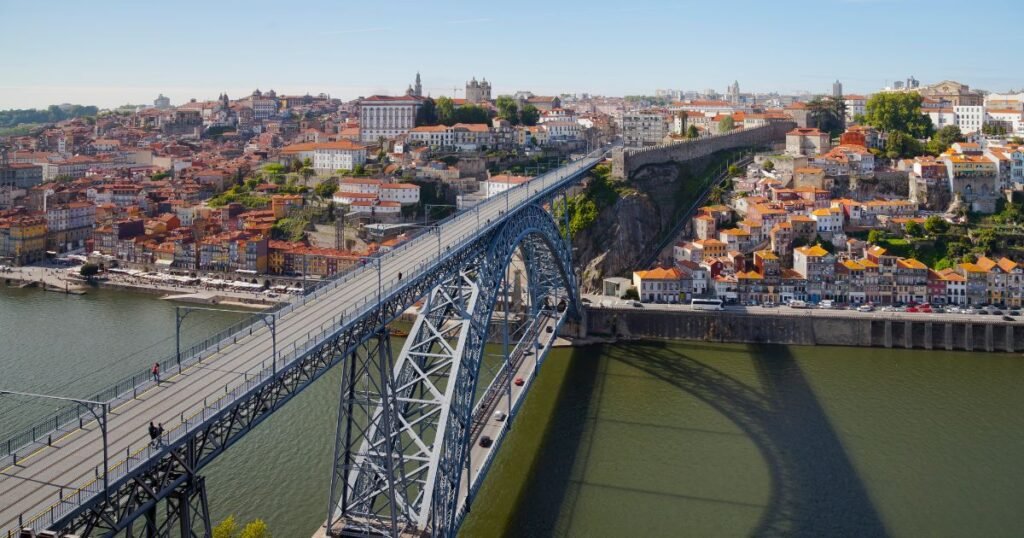
Camino Portugués (Portuguese Way) to Santiago de Compostela

The Camino Portugués (Portuguese Way) is the second most-walked route of all — second only to the Camino Francés. It runs up the Atlantic side of the Iberian Peninsula from Lisbon or Porto, crosses the Minho (Miño) River on the border between Portugal and Spain and enters Galicia, all the way to the Cathedral of Santiago de Compostela. From Lisbon it is about 610 km; from Porto, the most popular starting point, about 230 km, usually walked in 11 to 13 days.

All the distances for the main routes in one place: How Many Miles Is the Camino de Santiago?

It is a route of stone villages, vineyards, medieval bridges and lush greenery, quieter than the Camino Francés and with two countries and two cultures in a single journey. For many, it is also the gentlest way into the Camino de Santiago de Compostela — and one of the routes on which Ultreya Travel prepares self-guided itineraries.

Camino Portugués: Central Route, Coastal Route and Spiritual Variant
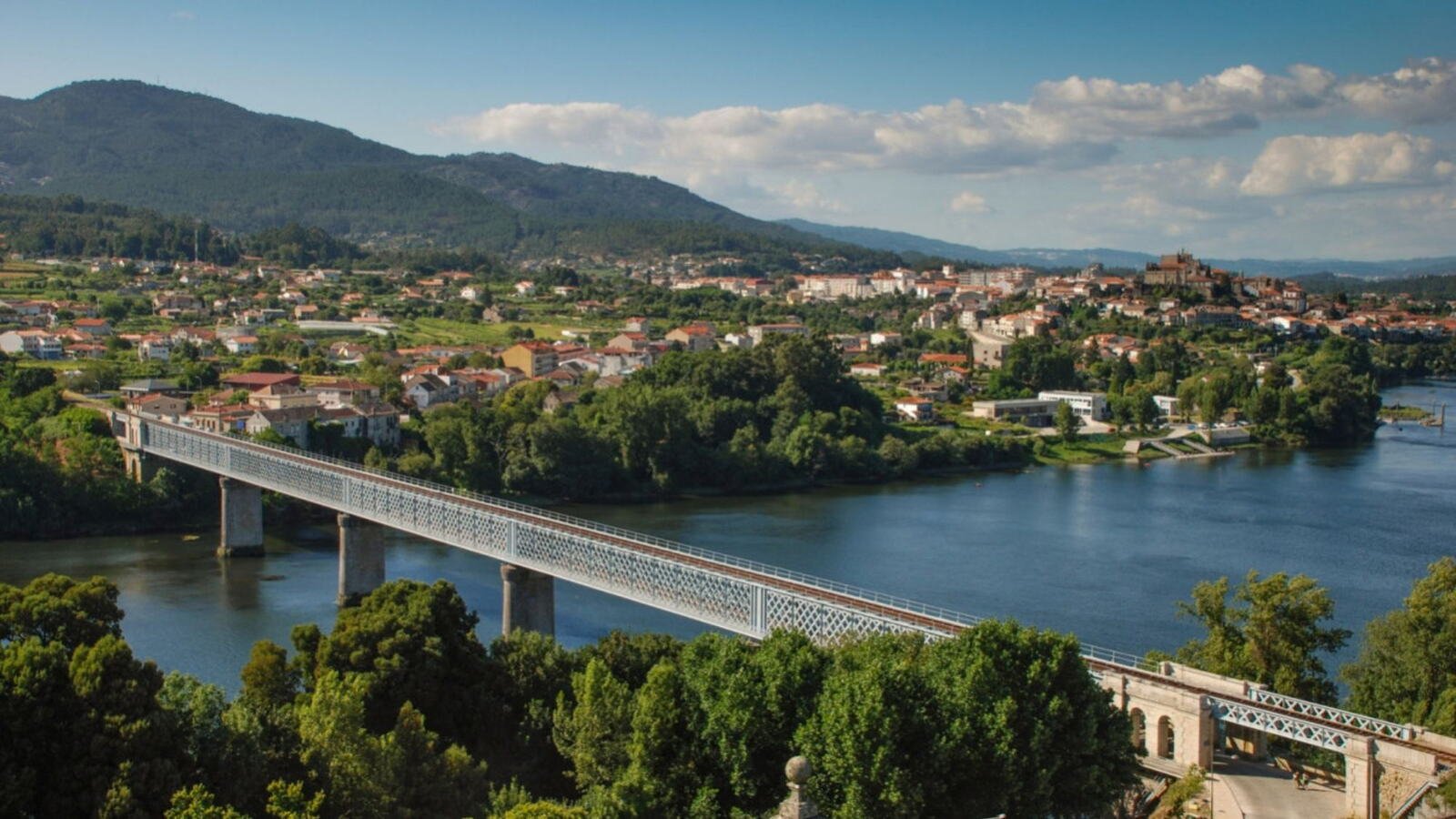
Camino Portugues from Tui to Santiago de Compostela

The Camino Portugués has three main variants. The Central Route, the most traditional, runs inland through Barcelos, Ponte de Lima and Valença. The Coastal Route leaves Porto along the sea, through Vila do Conde, Viana do Castelo and Caminha, and joins the Central Route at Redondela, in Galicia. The Spiritual Variant branches off at Pontevedra and ends with a boat trip along the Ría de Arousa and the Ulla River — the same route that, according to tradition, the boat carrying the body of the Apostle James followed.

Where the Camino Portugués starts and ends

The historic starting point is Lisbon, but most pilgrims start in Porto — and nobody has to walk the whole route. Every town along the way is also a possible starting point: Coimbra, Porto, Barcelos, Ponte de Lima, Valença or Tui, each shortening the walk without taking the pilgrim off the Camino Portugués. If you are starting in Porto, see how to get to Porto.

They all converge on the same destination: Obradoiro Square, in front of the Cathedral of Santiago de Compostela.

Main towns on the Camino Portugués — distance and days to Santiago

  • Lisbon – about 610 km to Santiago – 25 to 30 days of walking (historic start of the Camino Portugués)
  • Coimbra – about 360 km – 15 to 17 days
  • Porto – about 230 km – 11 to 13 days (most popular start)
  • Barcelos – about 180 km – 8 to 9 days
  • Ponte de Lima – about 145 km – 7 days
  • Valença / Tui – about 110 km – 5 to 6 days (minimum distance for the Compostela)
  • Redondela – about 80 km – 4 days
  • Pontevedra – about 60 km – 3 days
  • Caldas de Reis – about 40 km – 2 days
  • Padrón – about 20 km – 1 day
  • Santiago de Compostela – arrival

From Porto to the border: northern Portugal

From Porto, with its Sé cathedral and the Ribeira leaning over the Douro, the Camino heads north to Barcelos, town of the rooster legend — the story of a pilgrim on his way to Santiago, unjustly accused, that became a symbol of Portugal.

“The rooster of Barcelos was born from a pilgrim’s story: a man on his way to Santiago, a miracle and a truth that could not be silenced.”

Then comes Ponte de Lima, considered Portugal’s oldest town, with its medieval bridge over the Lima River. From there, the pilgrim tackles the climb over the Serra da Labruja, the mountain stage of the Camino Portugués, before descending to Valença, a walled town overlooking the Minho River.

In Valença, you only need to cross the International Bridge on foot to change country: on the other side is Tui, in Galicia, with its fortress-cathedral on the hilltop — and the start of the last 100 km. See how to get to Tui.

From Tui to Santiago: the final stages in Galicia

From Tui, the Camino passes through O Porriño and reaches Redondela, the town of great viaducts, where the Coastal Route joins the Central Route. Next come Ponte Sampaio, with its medieval stone bridge, and Pontevedra, whose old town is home to the Church of the Pilgrim Virgin (A Peregrina), built in the shape of a scallop shell.

After Pontevedra, the Camino crosses woods and villages to Caldas de Reis, famous for its hot springs, where many pilgrims take the chance to rest their feet.

“In Padrón, where tradition says the boat carrying the Apostle’s body came ashore, the pilgrim realizes they are one day from Santiago — and that arriving is only the beginning.”

Padrón is the last major stop before Santiago: according to tradition, it was there that the boat bearing the Apostle’s body arrived, and you can still see, in the church of Santiago, the stone it is said to have been moored to. It is also the home of the famous Padrón peppers and of the Galician poet Rosalía de Castro.

From Padrón, there are about 20 km left, through villages and woods, before entering Santiago de Compostela and reaching Obradoiro Square.

How long does the Camino Portugués take?

The full Camino Portugués, from Lisbon, takes 25 to 30 days of walking. But the time needed depends on the starting point: from Porto it is about 230 km, walked in 11 to 13 days; from Tui — which already meets the minimum distance for the Compostela — about 110 km, in 5 or 6 days.

Want to know how many days each route takes? See: How Long Does the Camino de Santiago Take?

The Camino Portugués with Ultreya Travel
You have just discovered the Camino Portugués, from Lisbon to Obradoiro Square. Ultreya Travel’s self-guided itineraries take you along the most popular sections of this route — from Tui or Porto to Santiago, crossing the border on foot and passing through Redondela, Pontevedra, Caldas de Reis and Padrón to the Cathedral — curated by someone who has walked the Camino de Santiago 12 times.

You walk at your own pace, with accommodation booked on every stage, daily luggage transfers and 24/7 assistance throughout your journey.

Want to compare it with other routes? See all our Camino de Santiago tour packages on one page.

Frequently asked questions about the Camino Portugués

The historic starting point is Lisbon, but most pilgrims start in Porto. You can also start in towns along the way, such as Coimbra, Barcelos, Ponte de Lima, Valença or Tui — each shortens the walk but is still part of the official Camino Portugués.

From Lisbon it is about 610 km. From Porto, on the Central Route, about 230 km; and from Tui, on the Spanish border, about 110 km.

To receive the Compostela, the official pilgrim certificate, you must walk at least the last 100 km to Santiago. On the Camino Portugués, the most popular starting point for this is Tui, in Galicia, just across the border from Valença, about 110 km from Santiago.

The full route from Lisbon takes 25 to 30 days. From Porto, 11 to 13 days; from Tui, 5 or 6 days — what matters is choosing the section that fits the time you have, not the other way round.

The Central Route runs inland through Barcelos, Ponte de Lima and Valença, and is the most traditional and best waymarked. The Coastal Route leaves Porto along the sea, through Vila do Conde, Viana do Castelo and Caminha, and joins the Central Route at Redondela, in Galicia. Both end together at the Cathedral of Santiago de Compostela.

Ultreya Travel
Privacy Overview

This website uses cookies to give you the best possible experience. Strictly necessary cookies are always active; all other cookies are only used if you consent. You can change your choice at any time.