
Camino Tui to Santiago de Compostela — Self-Guided From Tui to Santiago de Compostela
A stone border, a river dividing two countries and a path that has united them for more than a thousand years. Six stages and over one hundred kilometers of the Camino Portugués (Portuguese Way) to Obradoiro Square — at your own pace, with every detail already thought through by someone who knows this ground.
What’s Included in Your Camino Tui to Santiago de Compostela
Every detail is already taken care of — so you reach each stage thinking only about the next one, never about logistics.
Customize Your Camino Tui to Santiago de Compostela
The base price of € 750 already includes 7 nights in a double room with breakfast. Check anything you would like to add — the total is recalculated automatically. If it’s for a single pilgrim, the room is for individual use.
Camino Portugués Calculator — From Tui
Choose your start date
Day you arrive in Tui. Click a day and we will highlight every day of your Camino de Santiago.
Available year-round — pick the day that suits you best and we’ll take care of the rest.
Send your booking request
Loading the form…
Prices are subject to availability on your chosen date. Extra nights are quoted as “from” prices — we will confirm the final amount with you.
There may be small changes depending on accommodation availability on your chosen date.
By sending this request, you agree to our Privacy Policy.
The Camino Tui to Santiago de Compostela, Stage by Stage

1Arrival in Tui
Check-in and the first stamp in your pilgrim passport, on the banks of the Miño River. See how to get to Tui.
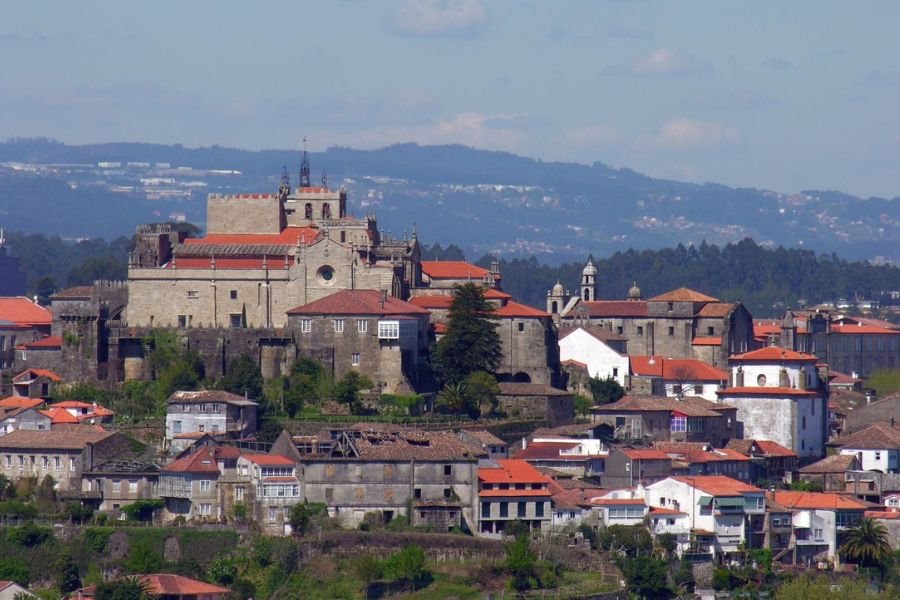
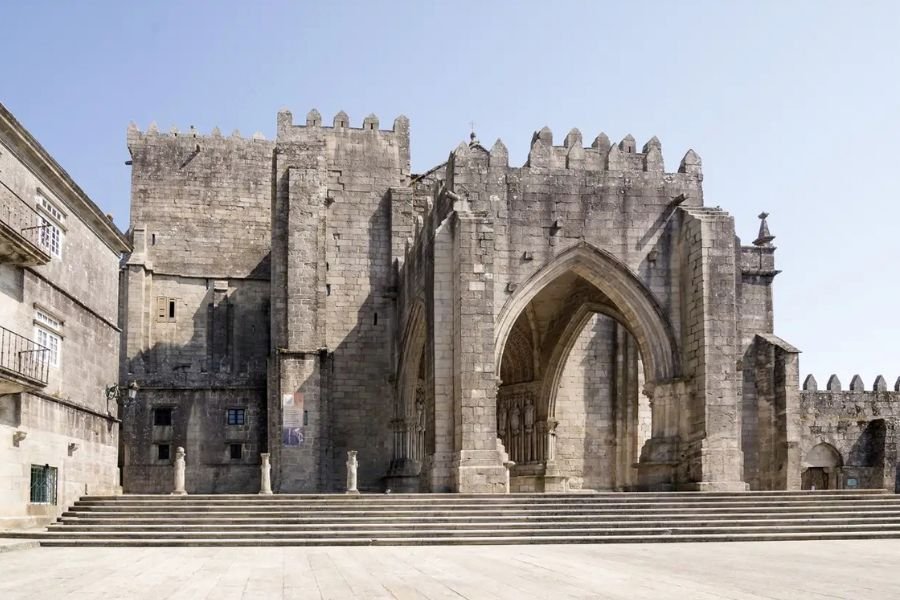
Tui is easy to explore on foot in just a few hours. Climb the stone streets to the Cathedral of Santa María, a 12th-century fortress-cathedral with battlements and a beautiful Gothic cloister, then head down to the banks of the Minho River: on the other side rises the fortress of Valença, in Portugal. In the evening, enjoy an unhurried dinner in the historic center and get your backpack ready for your first day in Galicia.
2Tui → O Porriño · ≈15 km
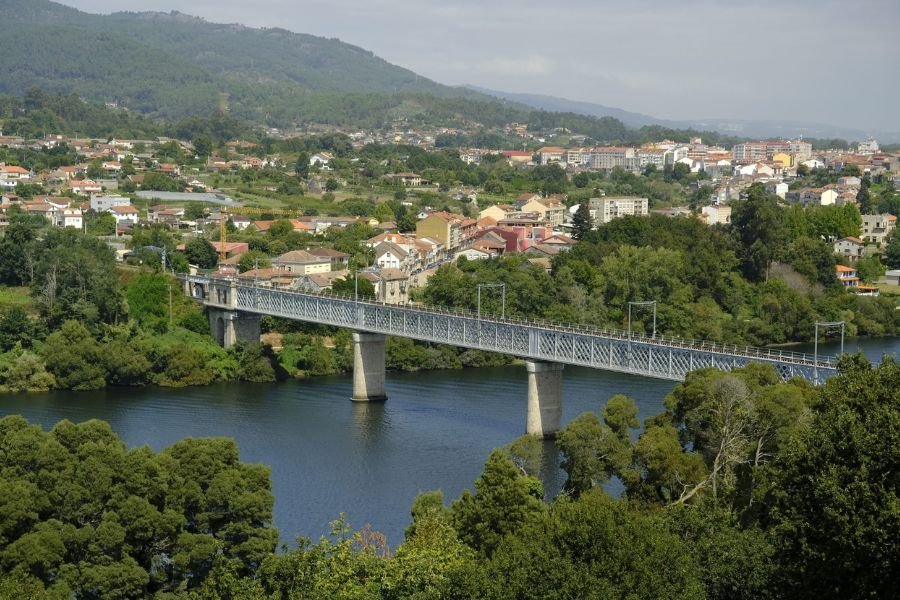
The bridge over the Miño is behind you: you enter Galicia on foot.
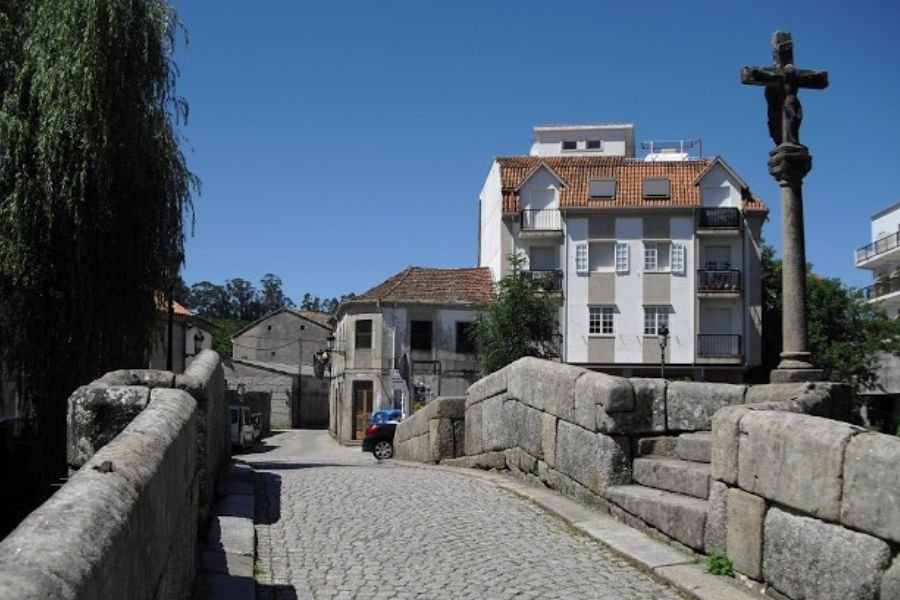
The way out of Tui crosses the historic center and descends to the Ponte das Febres, where, according to tradition, San Telmo fell ill in 1251 on his way back from Santiago. The Camino then enters the valley of the Louro River, through woodlands and small villages. As you approach O Porriño, a signposted alternative follows the river and avoids the industrial area; in the town center, take a look at the town hall designed by architect Antonio Palacios.
3O Porriño → Redondela · ≈16 km
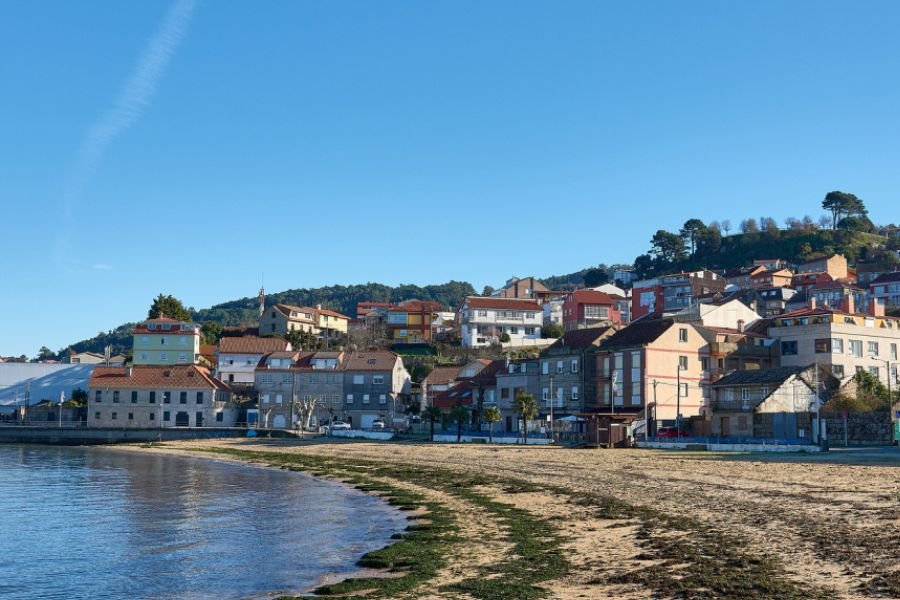
Your first encounter with the rías, where the sea reaches deep inland.
The stage passes through Mos, with its church and old pazo, and climbs to the Alto de Santiaguiño de Antas, the toughest climb of the day. From the top, the descent through the woods reveals the Vigo estuary for the first time. Redondela, spanned by two large railway viaducts, is where the Coastal Portuguese Way joins the Central route — from here on, you share the trail with more pilgrims.
4Redondela → Pontevedra · ≈19 km
Woodland, stone bridges and the arrival in one of the most beautiful old towns in Galicia.
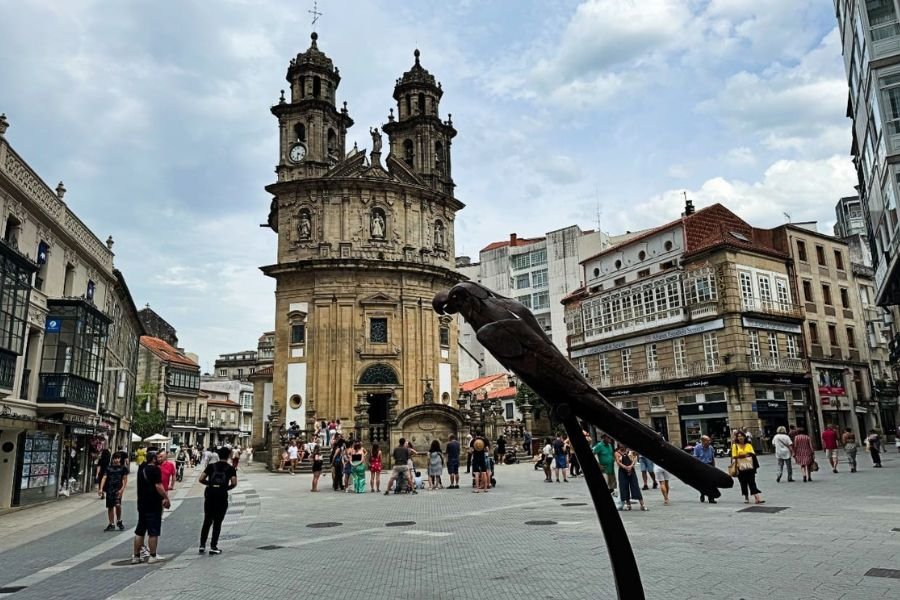
Today the Camino follows the estuary to Arcade, famous for its oysters, and crosses the medieval bridge of Ponte Sampaio over the Verdugo River, the site of a battle against Napoleon's troops in 1809. Next come stretches of old stone paving through the woods to Pontevedra, where the Sanctuary of the Virgen Peregrina, with its scallop-shell floor plan, welcomes pilgrims in the heart of the historic center.
5Pontevedra → Caldas de Reis · ≈21 km
Land of vineyards and hot springs — a well-earned rest for your feet.
You leave Pontevedra crossing the Lérez River on the Ponte do Burgo and continue along trails through woods, vineyards and small chapels, such as Santa Marta. The terrain is gentle, with few climbs. In Caldas de Reis, tradition says you should rest your feet in the thermal-water fountain in the town center — after several days of walking, it is one of the most pleasant moments of the Camino.
6Caldas de Reis → Padrón · ≈18 km
The town where, according to tradition, the boat carrying the body of the Apostle came ashore.
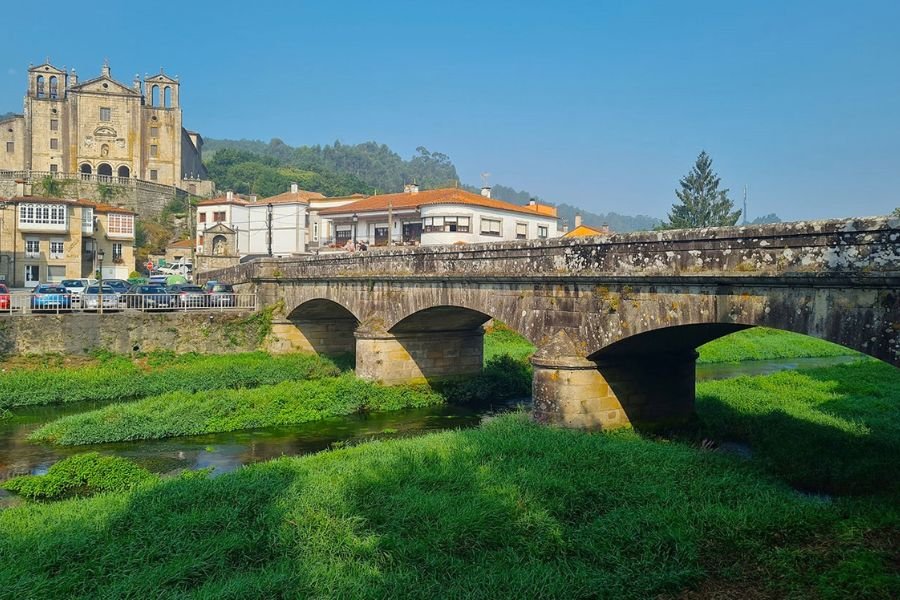
The Camino follows the Valga valley past villages, cornfields and oak woods, goes through Pontecesures, where the bridge crosses the Ulla River, and reaches Padrón. The church of Santiago de Padrón holds the "pedrón," the Roman stone where, according to tradition, the boat carrying the Apostle's body was moored. And don't leave without trying the famous Padrón peppers.
7Padrón → Santiago de Compostela · ≈20 km
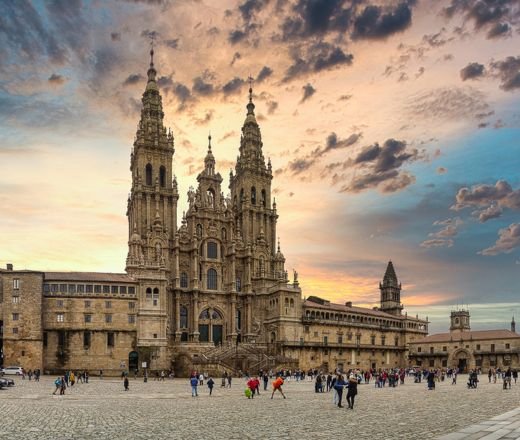
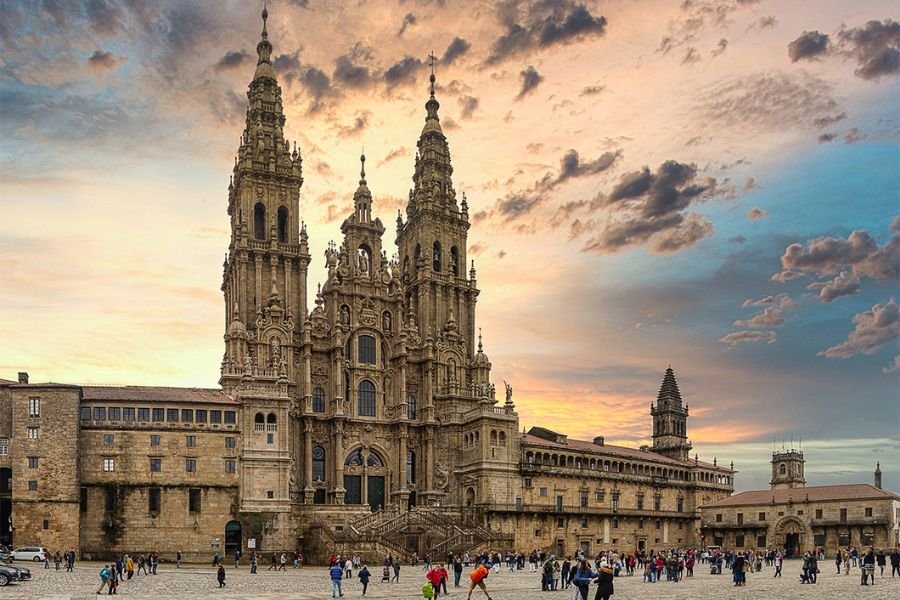
Your first sight of the Cathedral towers — and Obradoiro Square waiting for you.
The last day begins in Iria Flavia, with its collegiate church, one of the oldest episcopal seats in Galicia, and passes the Baroque sanctuary of A Escravitude. The final stretch crosses villages and woods to Milladoiro, where the towers of the Cathedral come into view. You enter Santiago from the south, through the Porta Faxeira, all the way to Obradoiro Square.
8Farewell to Santiago
Breakfast and check-out. There is still time for the noon Pilgrim’s Mass before you travel on — or you can stay one more night (see the extras).
Before you leave, walk all the way around the Cathedral: Praza das Praterías, with its Romanesque facade, Praza da Quintana and the Holy Door, which will be open to pilgrims in 2027, a Holy Year. If you have time, the Museum of Pilgrimages tells the story of more than a thousand years of the Camino. The Pilgrim's Mass at noon is the perfect farewell.
What you will see between Tui and Santiago de Compostela
Faith and Flavor Along the Camino Tui to Santiago de Compostela
A faith that crosses borders
2027 is a Compostela Holy Year — the Holy Door opens, and every pilgrim who crosses Obradoiro Square carries the possibility of the plenary indulgence. The Camino Portugués begins in another country but ends in the same place: before the Cathedral, with the same Pilgrim’s Mass and the same Botafumeiro swinging through the air, whatever border brought you there.
Two cuisines, one table
From Tui to Santiago, the Camino Portugués crosses villages where Galician cooking meets the flavors of northern Portugal — tetilla cheese, pulpo a la gallega (Galician-style octopus), a glass of Albariño from the Rías Baixas to celebrate each stage completed. Walking here also means sitting down at a table where two cultures meet.
A Camino Tui to Santiago de Compostela Curated by a Pilgrim Who Has Walked the Camino Twelve Times
Pablo Machado Soares walked the Camino de Santiago twelve times before founding Ultreya Travel, and he has lived in Spain, close to the routes that lead to Santiago, for 17 years. That experience is what ensures that the Camino Portugués, with its border history and its own rhythm, receives the same Ultreya curation: the right accommodation, reliable luggage transfers, and the attention to detail that makes the difference between walking the Camino and truly living it.
Similar Experiences
One of the advantages of the Camino de Santiago is its variety of routes. Have a look at similar options to what you selected.

Camino Tui to Santiago de Compostela — Self-Guided Package
Available year-round
"Buen Camino, pilgrim. When you reach Santiago, the Camino de Santiago is only beginning."