Camino Porto to Santiago de Compostela — Self-Guided From Porto to Santiago de Compostela
From the rooftops of Porto to Obradoiro Square: twelve stages through Portugal’s Minho region, the bridge at Tui and the Galician rías, on a Camino de Santiago from Porto that joins two countries, two sister languages and centuries of faith. Ultreya’s most complete Camino Portugués (Portuguese Way) — at your own pace, with every detail already thought through.
What’s Included in Your Camino Porto to Santiago de Compostela
Every detail is already taken care of — so you reach each stage thinking only about the next one, never about logistics.
Customize Your Camino Porto to Santiago de Compostela
The base price of € 1,340 already includes 13 nights in a double room with breakfast. Check anything you would like to add — the total is recalculated automatically. If it’s for a single pilgrim, the room is for individual use.
Camino Portugués Calculator — From Porto
Choose your start date
Day you arrive in Porto. Click a day and we will highlight every day of your Camino de Santiago.
Season: March 15 to October 31 — pick your start date within these dates and start packing your backpack.
Send your booking request
Loading the form…
Prices are subject to availability on your chosen date. Extra nights are quoted as “from” prices — we will confirm the final amount with you.
There may be small changes depending on accommodation availability on your chosen date.
By sending this request, you agree to our Privacy Policy.
The Camino Porto to Santiago de Compostela, Stage by Stage

1Arrival in Porto
Check-in and the first stamp in your pilgrim passport, in the city where so many Portuguese pilgrims began their Camino de Santiago. See how to get to Porto.
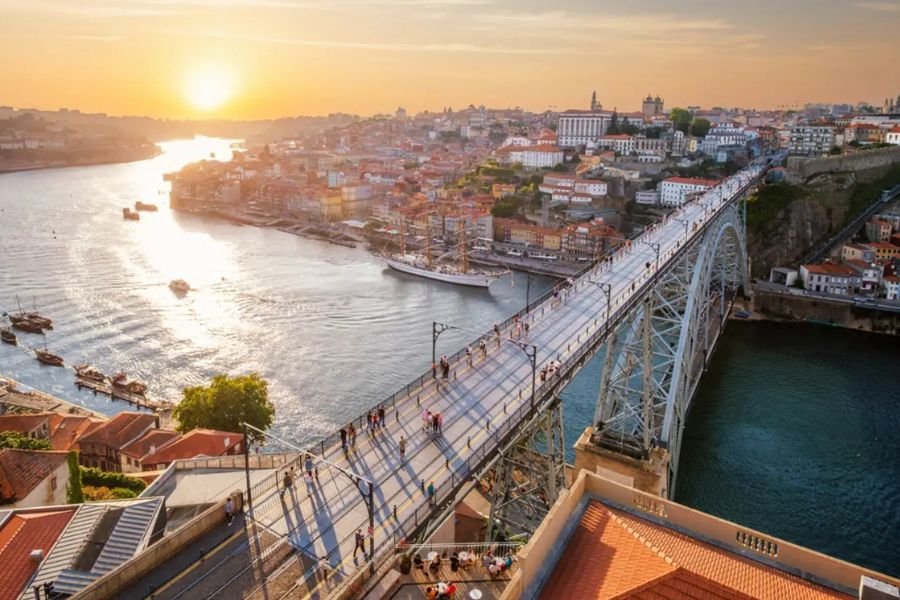
The Camino begins at the Sé do Porto, the cathedral at the top of the old quarter, where you can also get your credencial. From there, walk down the narrow streets to the Ribeira and the Douro River, with the Dom Luís I Bridge in the background. This is the day to take in the city without a backpack: a stroll through the historic center, a UNESCO World Heritage Site, and dinner overlooking the river before you set off.
2Porto → Vilar do Pinheiro / Arcos · ≈29 km
Leaving the city behind and the first kilometers heading north.
The first stage leaves downtown Porto through the streets of the northern part of the city and crosses the suburbs of Maia, a more urban stretch, before reaching the rural landscapes of Vilar do Pinheiro and Arcos. It is the day to find your own pace and follow the yellow arrows carefully, because there are many intersections. From tomorrow on, the countryside takes over the Camino.
3Arcos → Barcelos · ≈20 km
The town of the rooster, a symbol of Portugal born from a pilgrim legend.
The stage passes through São Pedro de Rates, with its Romanesque church, one of the oldest in Portugal, linked to the legend of the first bishop of Braga. The Camino then continues through fields and woods to Barcelos, where you cross the Cávado River on a medieval bridge. If you arrive on a Thursday, don't miss the town's big weekly market, one of the largest in Portugal.
4Barcelos → Balugães · ≈16 km
Country lanes of the Minho, between vineyards and fields.
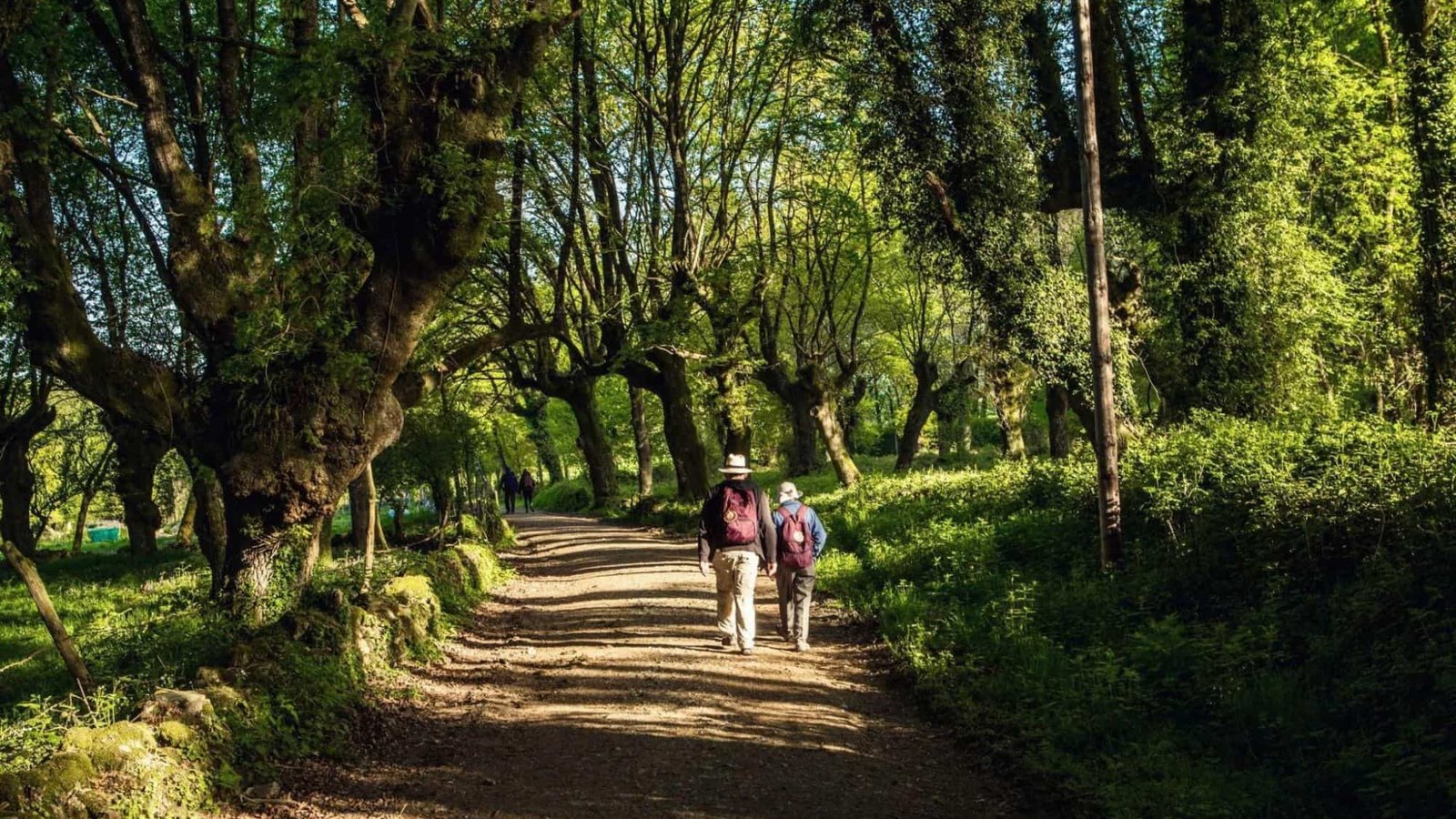
A short, idyllic day through the heart of the Minho region. The Camino climbs to Portela de Tamel and continues through Aborim and small villages, among vinho verde vineyards, stone granaries (espigueiros) and wayside crosses. In Balugães, the rural landscape is the best rest for your legs before the mountain stages.
5Balugães → Ponte de Lima · ≈17 km
Portugal’s oldest town and its medieval bridge over the Lima River.
The arrival in Ponte de Lima is one of the most beautiful on the Camino Portugués: the final stretch follows the bank of the Lima River, under a tree-lined avenue, to the many-arched medieval bridge. The town, the oldest in Portugal, with a charter from 1125, has a charming historic center — try arroz de sarrabulho, the local specialty.
6Ponte de Lima → Rubiães · ≈18 km
The climb over the Serra da Labruja, the mountain stage of the Camino Portugués.
This is the mountain stage of the Camino Portugués. After Ponte de Lima, the trail climbs the Serra da Labruja along stone paths through the woods, up to the pass where the Cruz dos Franceses stands, covered with small crosses left by pilgrims. The descent leads to Rubiães, where the Romanesque church of São Pedro preserves an ancient Roman milestone.
7Rubiães → Tui · ≈19 km
Valença and the bridge over the Minho: you enter Galicia on foot.
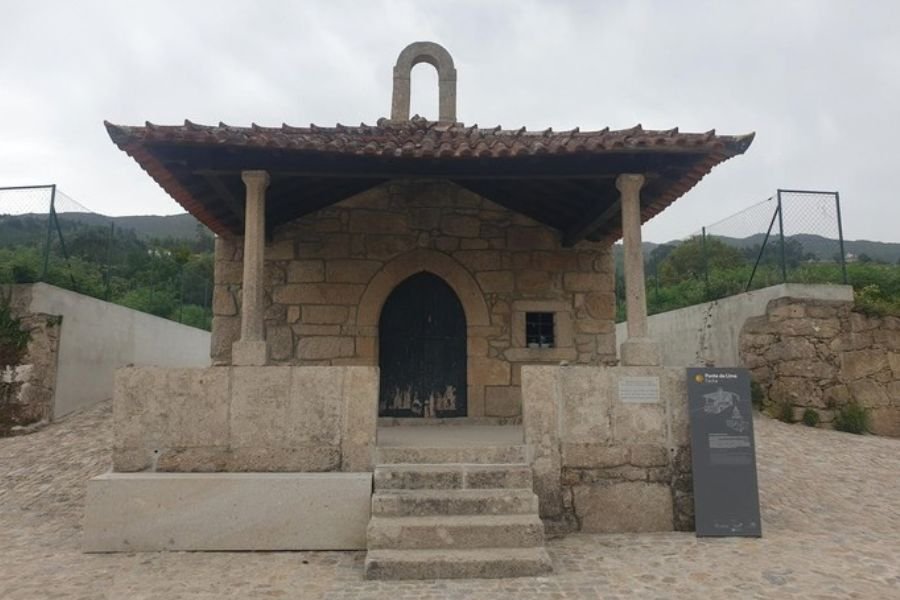
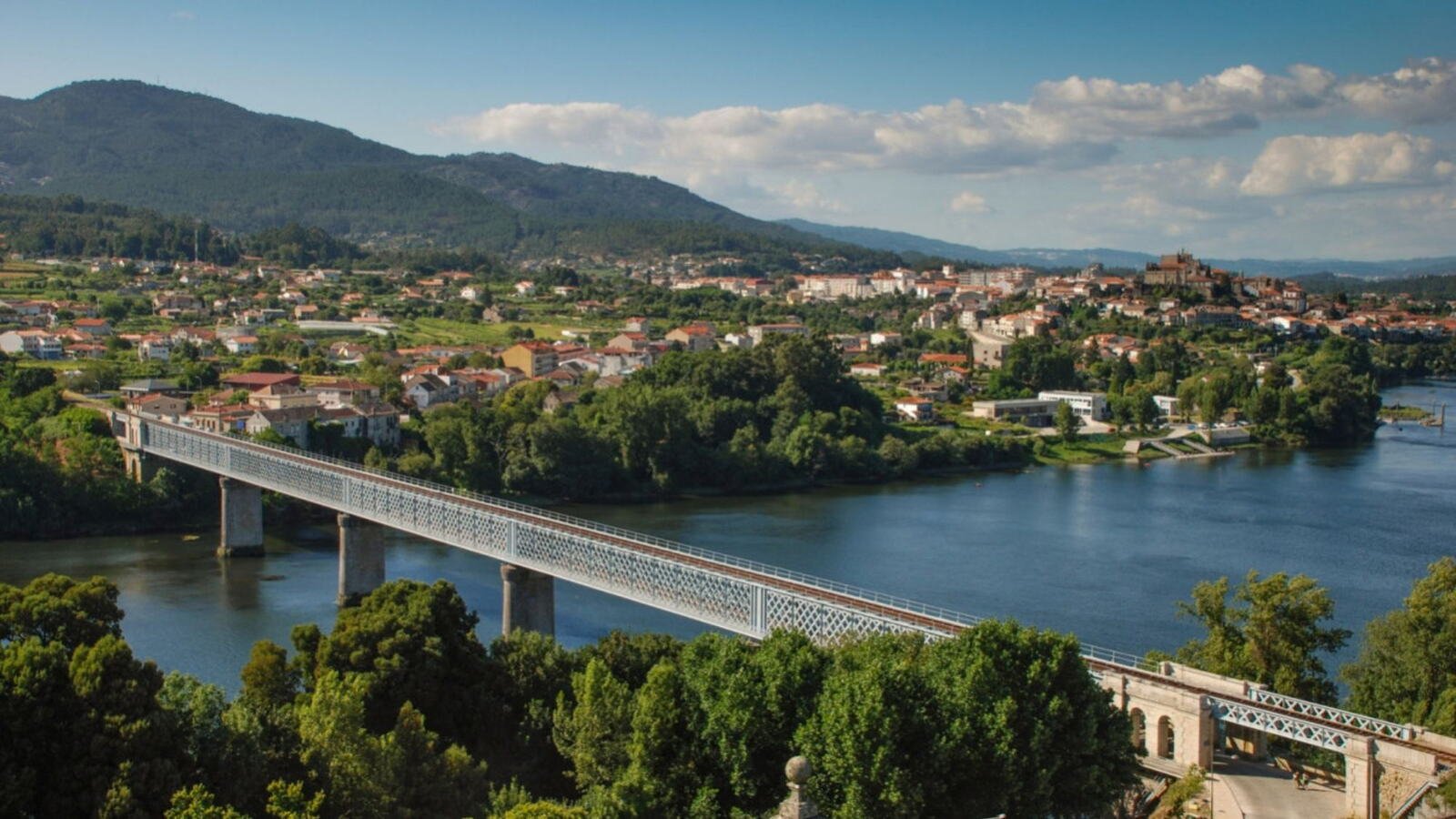
Your last day in Portugal passes the chapel of São Bento da Porta Aberta and continues to Valença, with its massive bastioned ramparts above the Minho River. The international bridge takes you on foot to Tui, in Galicia — remember to set your watch forward one hour. It is one of the most symbolic moments of the Camino: two countries separated only by a river.
8Tui → O Porriño · ≈15 km
Tui’s fortress-cathedral is behind you; the Galician Camino begins.
After Tui's cathedral, the Camino descends into the valley of the Louro River, with stretches of woodland that seem forgotten by time. On this stage, many pilgrims choose the alternative route along the river, greener and quieter, to reach O Porriño away from the traffic. It is a short day — ideal for resting after the Portuguese stages.
9O Porriño → Redondela · ≈16 km
Your first encounter with the rías, where the sea reaches deep inland.
Between O Porriño and Redondela, the Camino climbs through the woods to the highest point of the day and then descends with ever wider views of the Vigo estuary and its mussel rafts. In Redondela, the 19th-century railway viaducts dominate the town's skyline, which marks the meeting point with the Coastal Portuguese Way.
10Redondela → Pontevedra · ≈19 km
Woodland, stone bridges and one of the most beautiful old towns in Galicia.
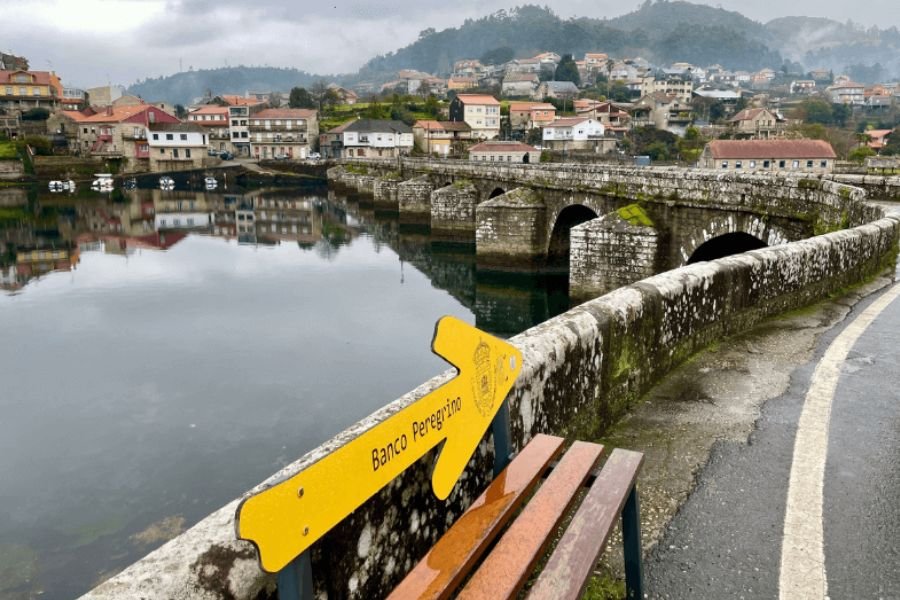
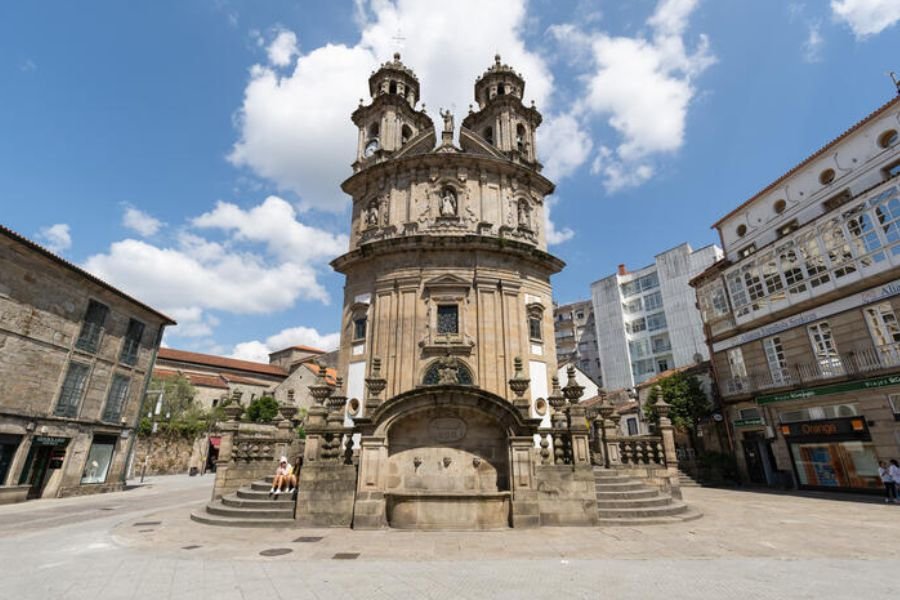
A stage of water and stone: the trail follows the edge of the estuary to Arcade, where the oysters are well worth trying, and crosses the Verdugo River on the Ponte Sampaio, of medieval origin. Then come woods and old stone-paved roads to Pontevedra, whose historic center, almost entirely stone-built and pedestrian-only, is one of the best preserved in Galicia.
11Pontevedra → Caldas de Reis · ≈21 km
Land of vineyards and hot springs — a well-earned rest for your feet.
Leaving Pontevedra, the Camino crosses a Galicia of vineyards, woods and villages with hórreos, on an almost flat route. This is Albariño wine country, and vines supported by stone columns line much of the day. In Caldas de Reis, the hot springs are the perfect place to soothe tired feet.
12Caldas de Reis → Padrón · ≈18 km
The town where, according to tradition, the boat carrying the body of the Apostle came ashore.
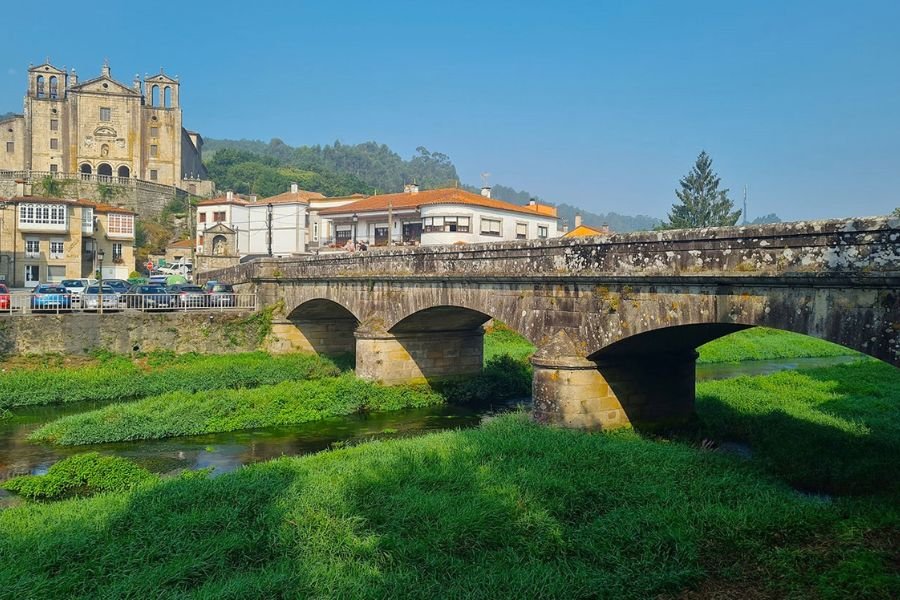
The second-to-last day of walking passes through San Miguel de Valga and Pontecesures, where the Ulla River separates the provinces of Pontevedra and A Coruña, and ends in Padrón. According to tradition, this is where the story of Santiago in Spain begins: it was in Padrón that the boat carrying the Apostle's body arrived. Climb up to Santiaguiño do Monte, where the Apostle is said to have preached.
13Padrón → Santiago de Compostela · ≈20 km
Your first sight of the Cathedral towers — and Obradoiro Square waiting for you.
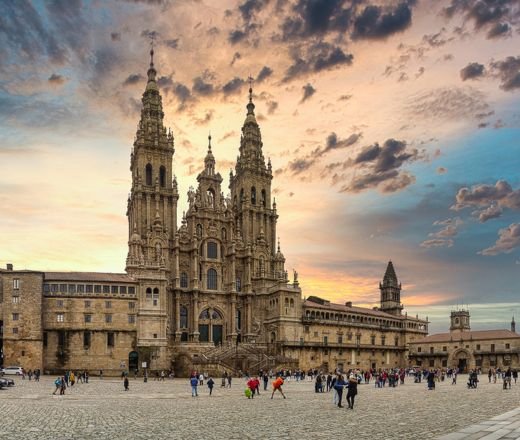
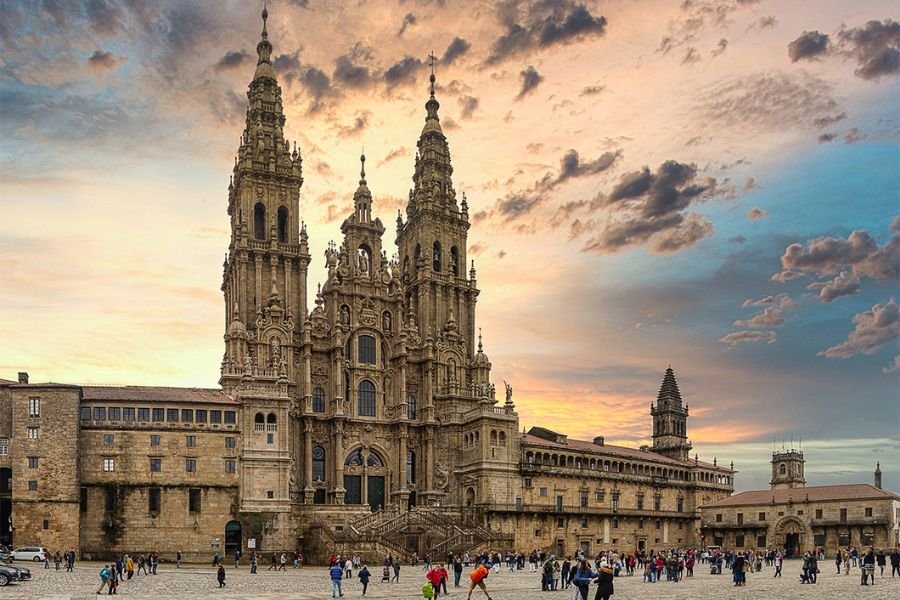
The last day crosses Iria Flavia and the sanctuary of A Escravitude before continuing through villages to O Milladoiro and the first neighborhoods of Santiago. You enter the city from the south and, after twelve stages from Porto, arriving in Obradoiro Square feels truly special. Pick up your Compostela at the Pilgrim's Office.
14Farewell to Santiago
Breakfast and check-out. There is still time for the noon Pilgrim’s Mass — or you can stay one more night (see the extras).
A day to celebrate at your own pace. Climb onto the Cathedral rooftops to see the city from above, stroll along Rúa do Franco and Rúa do Vilar, under the arcades, and try Tarta de Santiago at one of the bakeries downtown. At noon, the Pilgrim's Mass brings an emotional close to a Camino that began in another country.
What you will see between Porto and Santiago de Compostela
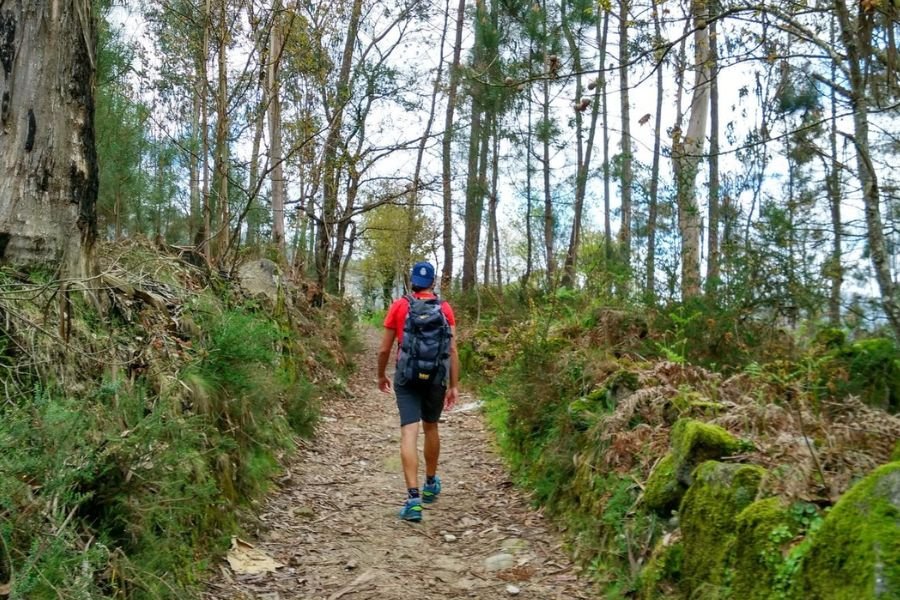
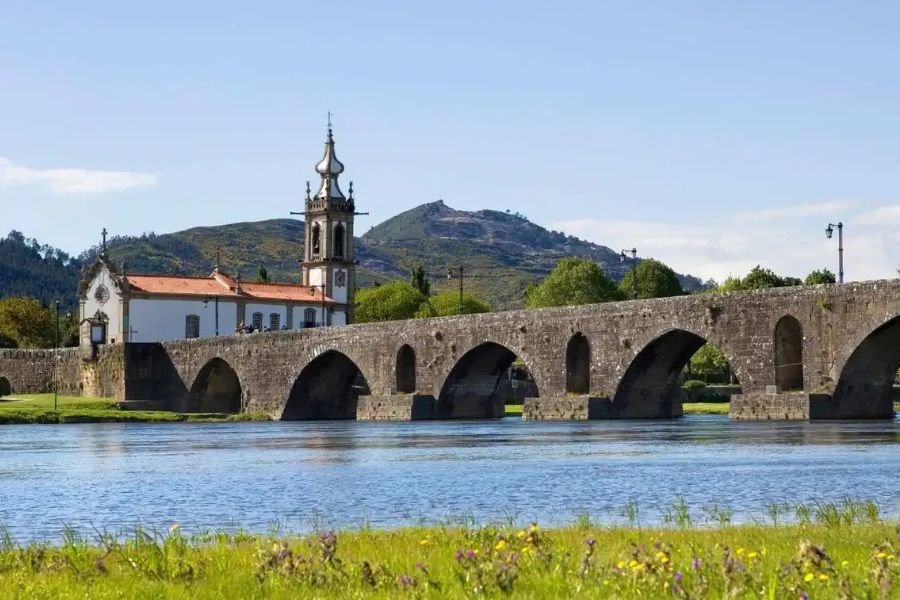
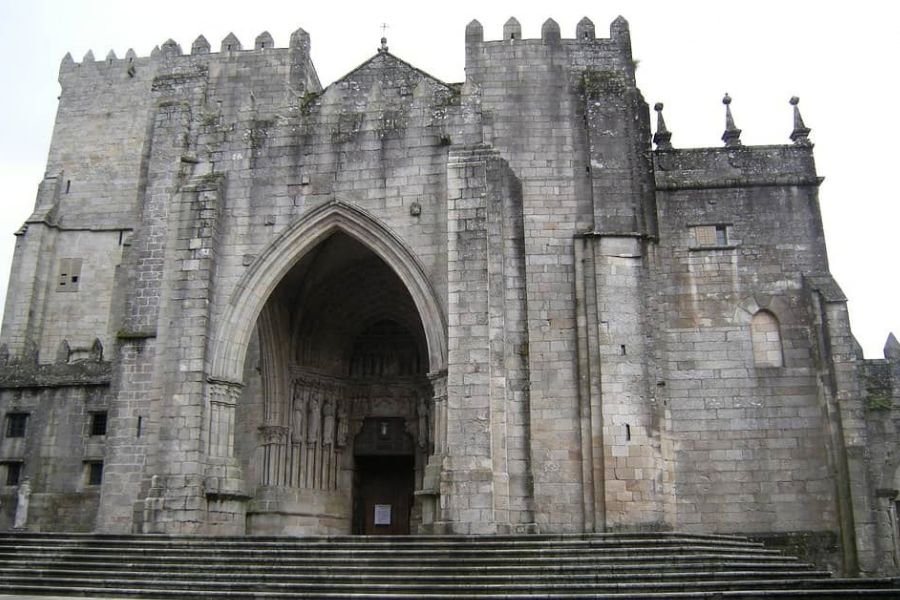
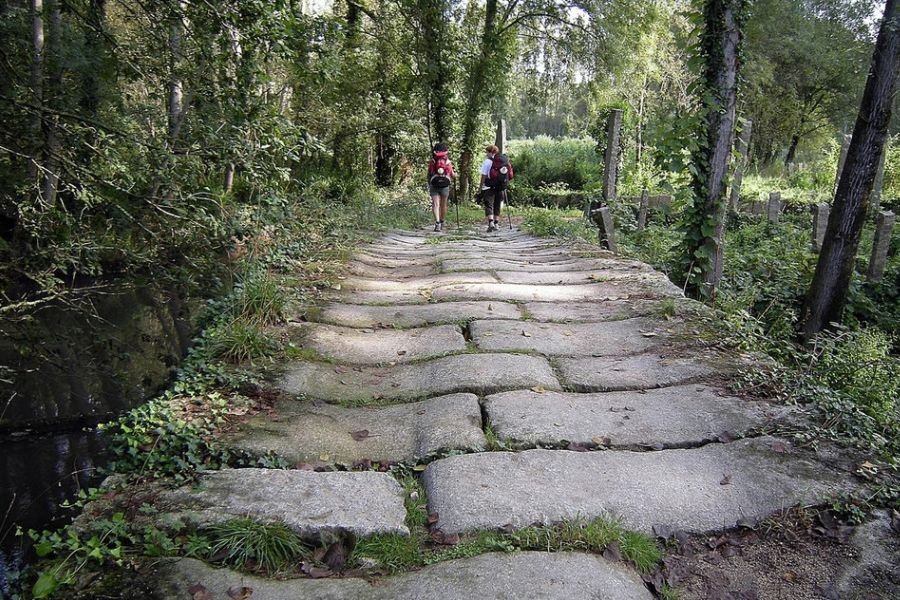
Faith and Flavor Along the Camino Porto to Santiago de Compostela
A faith that crosses borders
For centuries, Portuguese pilgrims followed this same route toward the Apostle’s tomb. In 2027, a Compostela Holy Year, the Holy Door opens for all who arrive — with the possibility of the plenary indulgence, the Pilgrim’s Mass and the Botafumeiro as it swings over the nave. It begins in Portugal and ends in the same place as every Camino de Santiago: before the Cathedral.
From port wine to Albariño
The Camino de Santiago begins at the table of Porto and the Minho — bacalhau (salt cod), Ponte de Lima’s arroz de sarrabulho, a glass of vinho verde — and crosses the border to pulpo a la gallega, tetilla cheese and Albariño from the Rías Baixas. Few routes offer two cuisines so close together and so different on a single journey.
A Camino Porto to Santiago de Compostela Curated by a Pilgrim Who Has Walked the Camino Twelve Times
Pablo Machado Soares walked the Camino Francés twelve times before founding Ultreya Travel, and he has lived in Spain for 17 years. That experience is what ensures the Camino Portugués, with its border history and its own rhythm, receives the same Ultreya curation: thirteen nights of the right accommodation, reliable luggage transfers and the attention to detail that makes the difference between walking the Camino de Santiago and truly living it.
Similar Experiences
One of the advantages of the Camino de Santiago is its variety of routes. Have a look at similar options to what you selected.

Camino Porto to Santiago de Compostela — Self-Guided Package
Season: March 15 – October 31
"Buen Camino, pilgrim. When you reach Santiago, the Camino de Santiago is only beginning."