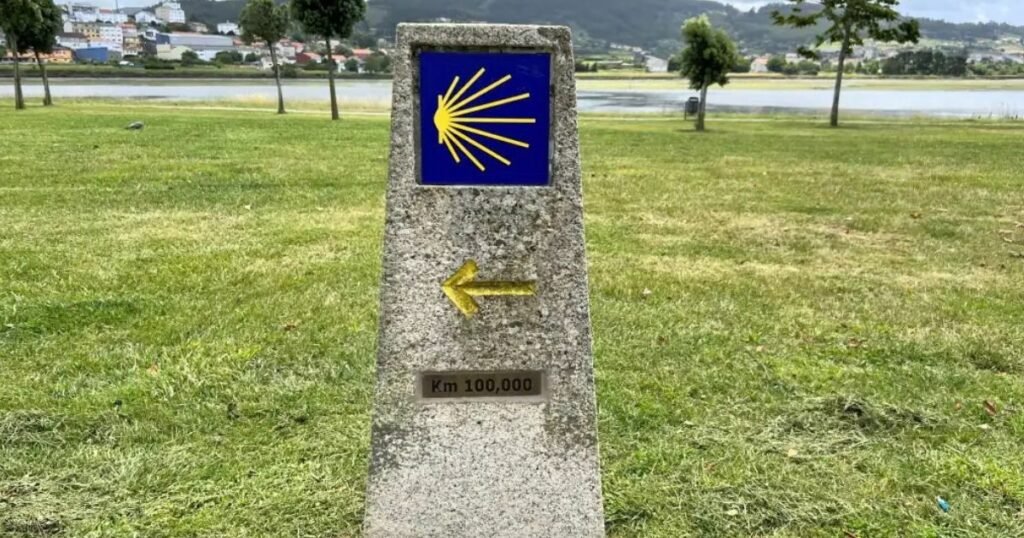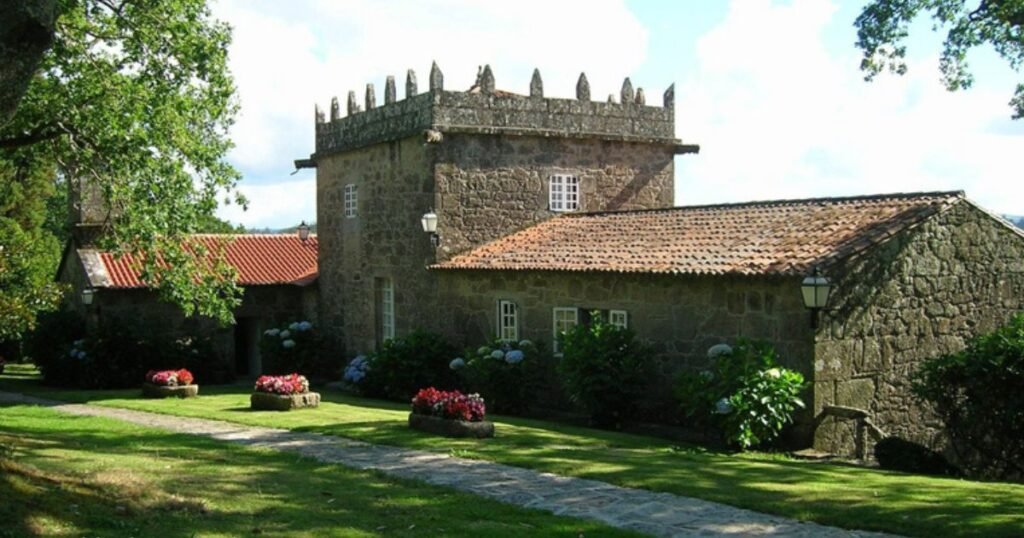
Ultreia et Suseia: What the Camino de Santiago Greeting Means

If you have been researching the Camino de Santiago, you have probably seen this phrase on signs, on stickers and in conversations between pilgrims. Here we explain where it comes from, what it means, and why it also gives Ultreya Travel its name.

What Ultreia et Suseia Means

Ultreia et suseia comes from medieval Latin. Ultreia derives from ultra, further beyond, and suseia comes from sursum, upward or higher. Together, the two words work as an invitation: let us go further, let us go higher — a way of telling someone who is tired to keep walking.

The phrase was written down nearly 900 years ago in the Codex Calixtinus, a 12th-century manuscript also known as the Liber Sancti Jacobi and considered the first travel guide in history written for pilgrims on the Camino de Santiago. It contains the hymn Dum Pater Familias, whose refrain — E ultreia, e suseia, Deus aia nos — is one of the oldest polyphonic compositions known in Europe.

How the greeting was used says even more about its meaning than the literal translation. On the medieval routes, “Ultreia et suseia” was never a phrase you said alone, to yourself — it was a call and a response. One pilgrim would shout “Ultreia!” to the tired pilgrim coming up behind, and the other would answer “Et suseia!”, giving back the same strength they had just received. No pilgrim carried that shout alone; it only existed between two people.

Historians of the Camino de Santiago de Compostela point to a deeper layer in that exchange. For many medieval pilgrims, “Ultreia et suseia” also held the promise of meeting again: in Compostela, if the Camino allowed it — or “higher up”, already in the arms of faith, if life did not. A greeting for the road that carries hope for this life and the next at once. Few words in the history of pilgrimage hold so much in so little.

“Ultreia is not a word you say to yourself. It is the strength you lend to whoever is walking right behind you.”

Choose your self-guided Camino de Santiago

We take care of everything: accommodation, luggage transfer between stages and 24/7 assistance. All you have to do is walk.
Further Beyond, Higher Up: The Call That Comes from Within

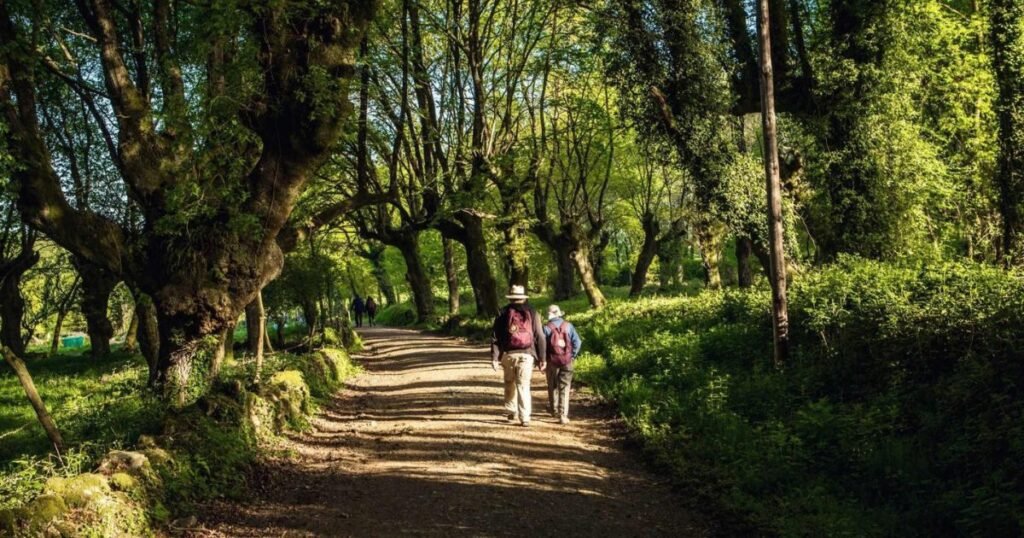
Maybe you reached this page without exactly looking for it. Maybe you saw “Ultreia” in the comments under a video, on a backpack sticker, in the caption of a photo posted by someone who now talks about the Camino de Santiago de Compostela with different eyes. And somehow that strange word stayed with you.

That is no coincidence. This is how the Camino usually begins — long before the first step, long before any ticket is booked. It begins as a small call, almost inaudible, that keeps coming back: a wish to walk more, to carry less, to find out what is left of you once everything that is not essential has been stripped away.

Paulo Coelho, the most widely read Brazilian writer in the world, walked the Camino de Santiago de Compostela back in the 1980s — a journey that led him to leave behind the life he had until then and write his first book, “The Pilgrimage” (1987), the seed of what would become “The Alchemist”, one of the most widely read books on the planet. He was not the only one: generations of pilgrims, writers and ordinary people describe the same pattern — something on this road has the power to rearrange an entire life from the inside.

Some pilgrims carry the phrase with them long after Santiago fades into memory. Search anywhere online today and you will find “Ultreia et suseia” inked onto shoulders, forearms, and the inside of wrists — two words chosen not for how they look, but for what they are still able to say, years later, on a hard day that has nothing to do with any camino at all. A tattoo cannot walk for you. But it can remind you, every time you catch it in a mirror, that you have already gone further than you thought you could, and that going higher is still allowed.

“Ultreia”, then, stops being merely a medieval greeting and becomes almost a question the Camino itself asks anyone who is still hesitating: further beyond what? Higher up from where? Only those who start walking find the answer — and that is why, for so many pilgrims, the Camino de Santiago de Compostela stops being a destination on a map and becomes a crossing inward.

“The heart already knows the way before the feet do — you only need the courage to follow it.”

Further beyond: other starting points

Other routes and other distances, with the same curation from someone who has walked the Camino de Santiago twelve times.
Ultreia as an Act of Faith

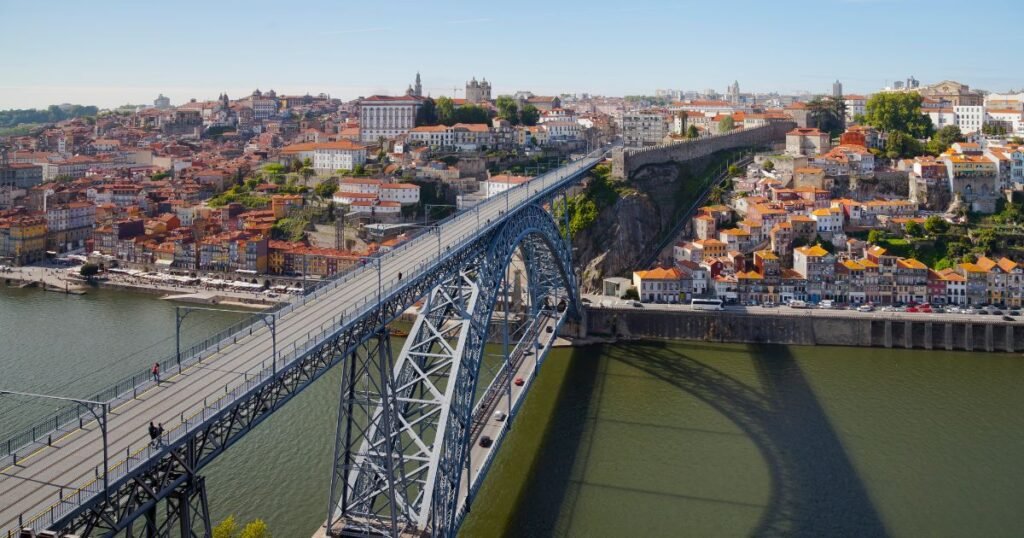
For those who walk out of faith — and even today, for many, the Camino de Santiago de Compostela is above all that — saying “Ultreia” to a stranger is also a small act of devotion: a way of remembering, and of reminding the other, that no one walks to the Apostle James alone.

The oldest reading of the phrase points in that direction, as we saw: the promise of meeting again in Compostela, or “higher up”, already in the arms of faith. A greeting that carries hope for this life and the next — few greetings for the road in Christian history hold so much meaning in so few syllables.

It is no accident that this greeting crossed the Middle Ages to reach the 2027 Xacobeo Holy Year, the same rare alignment of the sacred calendar that grants the plenary indulgence to anyone who crosses the Holy Door of the Cathedral of Santiago de Compostela. Those who walk in faith during these years carry, along with their backpack, a weight and a lightness that only religion can truly explain: the weight of devotion, the lightness of forgiveness.

“Between one Ultreia and the next, no pilgrim walks alone — neither before the Camino nor before God.”

Higher up: the quieter Caminos

Discreet routes, for anyone looking for the Camino de Santiago without the crowds.
Already Know You Want to Walk? Discover Our Self-Guided Itineraries

Ultreya Travel puts together self-guided itineraries along the Camino de Santiago de Compostela, designed for the 2027 Xacobeo Holy Year:

🏨 Accommodation booked, 🎒 Luggage transfer between stages, 📱 24/7 assistance throughout the trip, 🧭 Itinerary built by someone who has walked the Camino 12 times

From "Ultreia et Suseia" to "Buen Camino"

If you walk the Camino de Santiago de Compostela today, you are far more likely to hear a simple “Buen Camino” than the old “Ultreia et suseia”. That shift did not happen overnight: through the 20th century, as the Camino stopped being almost exclusively a religious pilgrimage and began welcoming walkers of every background and language, the greeting was gradually simplified. “Buen Camino” has the advantage of being immediate and universal — you do not need to know medieval Latin or the history behind the phrase to understand what the person saying it means.

But something is lost in that exchange as well. “Ultreia et suseia” carried a double movement — forward and upward — as if every step on the Camino were both progress through space and a step closer to something greater. “Buen Camino” keeps the spirit of encouragement, but leaves behind that dimension of spiritual ascent the earliest pilgrims put into the phrase. Even so, the gesture behind both expressions has never changed: a stranger crosses your path, looks at you and sincerely wishes your journey well — sometimes over a shared glass of red wine in an albergue after a long stage, sometimes in silence, in a solitary wandering tied to each person’s faith.

Words change with time. The wish that the other arrives safely stays the same in every “Buen Camino” spoken on the road.

Ultreia on the Camino Today

Even eight hundred years after the Codex Calixtinus, it is common to hear pilgrims say Ultreia! to one another on the hardest climbs, at the end of a long day, or simply as a goodbye when crossing paths with another walker. That is the spirit we carry in the name Ultreya Travel: the idea that no one finishes the Camino alone.

Science is beginning to confirm what pilgrims have always known. A study published in 2022 in the Journal for the Study of Spirituality compared the life changes reported by people who walk the Camino de Santiago de Compostela to those of exceptional human experiences — the same kinds of transformation reported after deep mystical experiences: more gratitude for life, a stronger search for meaning, more care for others, and a deeper sense of spirituality that often lasts long after arriving in Compostela.

It is that same spirit — that no one finishes the Camino de Santiago de Compostela alone — that we carry in the name Ultreya Travel: a “y” that honors the old “i” without copying it, tying the medieval greeting of further beyond, higher up to every pilgrim who walks with us today.

If your wish to walk is already stronger than your doubts, the next step is simple: find out everything about the Camino de Santiago de Compostela — routes, history and answers to the most common questions — or talk to us about putting together your self-guided itinerary for the 2027 Xacobeo Holy Year.

“Ultreia et Suseia — further beyond and higher up.”

“When you reach Santiago de Compostela, the Camino de Santiago is only beginning.”

Frequently Asked Questions About Ultreia et Suseia

What is ultreia?
It is an old greeting of encouragement used by pilgrims on the Camino de Santiago since the Middle Ages. It means, roughly, further beyond — an encouragement to keep walking.
It means something like further beyond, higher up. It is the full form of the greeting, recorded since the 12th century, and pilgrims still use it today to greet and encourage one another along the Camino de Santiago.

It is the most puzzling part of the greeting. While “ultreia” clearly comes from the Latin ultra (“further beyond”), the origin of “suseia” divides scholars: some theories link it to the Latin subsequi (to follow, to come right behind), as if it were the answer of the pilgrim walking behind — “I am following you”; others read it as “higher up”, reinforcing the idea of a journey upward, both physical and spiritual. There is no single definitive translation, and perhaps it is precisely that mystery that has kept the word alive for so many centuries.

The earliest known written record is in the Codex Calixtinus, a 12th-century manuscript tied to the Cathedral of Santiago de Compostela that gathers chants and guidance for medieval pilgrims — it is in the musical appendix of that codex, in Book V, that the phrase appears as part of a chant sung at Pilgrim’s Mass celebrations. Almost a thousand years later, the same phrase still echoes in the Cathedral and in the imagination of everyone walking the Camino de Santiago de Compostela.

The historical and more correct spelling is ultreia, with an i. Ultreya, with a y, is the spelling we chose for our agency’s name, a way of honoring that greeting without copying the original word exactly. On the Camino de Santiago, both refer to the same thing: the same spirit of encouragement that has crossed the centuries.

Because, originally, “Ultreia et suseia” was not a phrase said alone — it was a call and a response between two pilgrims, a way of lending strength to whoever was more tired. Today, even though “Buen Camino” is the greeting heard most often day to day, many pilgrims still trade an “Ultreia!” on the hardest climbs, as a way of remembering that no one walks the Camino de Santiago de Compostela entirely alone.

They are cousins, but they are not identical. “Buen Camino” is the simple greeting that became standard among pilgrims through the 20th century, easy to understand in any language and exchanged at every meeting on the road. “Ultreia et Suseia” carries an extra layer: it was born as an almost liturgical call, tied to faith and to the idea of pressing on toward something greater. Today the two coexist — a pilgrim can say “Buen Camino” all day and still let out an excited “Ultreia!” on a tougher climb.

Roughly “ool-TREY-ah et soo-SAY-ah” in English, though the exact sound shifts slightly with the language of whoever is saying it. The phrase is medieval Latin, not Spanish, Portuguese, or English, so there is no single “correct” modern accent to copy — only the version pilgrims themselves have carried, a little differently, for nine centuries.

Yes — it is one of the most common tattoos among Camino pilgrims, precisely because two words hold the whole spirit of the road: keep going, and rise while you do it. If you are considering one, the historically correct spelling is “Ultreia et suseia” (with an i, not a y), matching the version recorded in the Codex Calixtinus in the 12th century.

Ultreya Travel
Privacy Overview

This website uses cookies to give you the best possible experience. Strictly necessary cookies are always active; all other cookies are only used if you consent. You can change your choice at any time.