
Camino Finisterre (Fisterra) — Self-Guided From Santiago de Compostela to Finisterre
For those who have reached Santiago and feel the Camino de Santiago is not over yet: four stages on the Camino Finisterre (Fisterra) toward the place the ancients called the end of the known world, where the land ends and the Atlantic begins. It can be walked on its own or added to any other Ultreya package that ends in Santiago.
What’s Included in Your Camino Finisterre (Fisterra)
Every detail is already taken care of — so you reach each stage thinking only about the next one, never about logistics.
Customize Your Camino Finisterre (Fisterra)
The base price of € 540 already includes 5 nights in a double room with a hearty breakfast. Check anything you would like to add — the total is recalculated automatically. If it’s for a single pilgrim, the room is for individual use.
Camino Finisterre Calculator
Choose your start date
Day you arrive in Santiago de Compostela. Click a day and we will highlight every day of your Camino de Santiago.
Season: March 15 to October 31 — pick your start date within these dates and start packing your backpack.
Send your booking request
Loading the form…
Prices are subject to availability on your chosen date. Extra nights are quoted as “from” prices — we will confirm the final amount with you.
There may be small changes depending on accommodation availability on your chosen date.
By sending this request, you agree to our Privacy Policy.
The Camino Finisterre (Fisterra), Stage by Stage

1Arrival in Santiago de Compostela
Check-in and free time in the city — if you have not been yet, this is the day for the Pilgrim’s Mass.
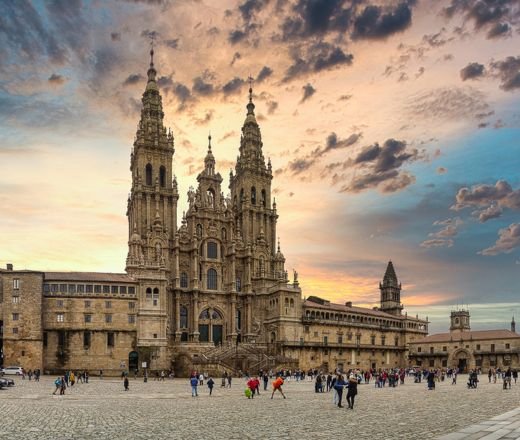
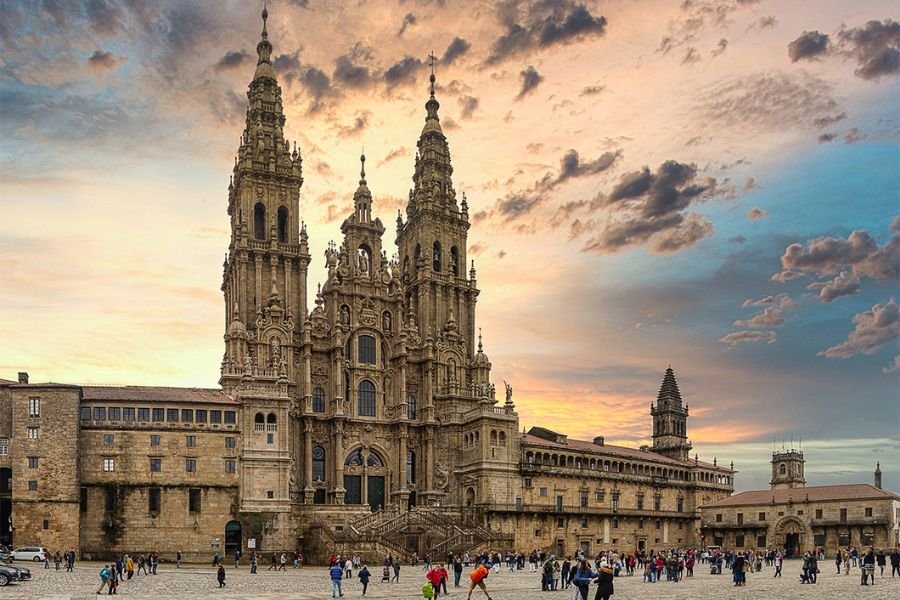
A day to experience Santiago before moving on. If you have just arrived from another Camino, it is time to rest and attend the Pilgrim's Mass; if this is your first time here, stroll through the historic center and Obradoiro Square. In the evening, pack your backpack: tomorrow you follow the trail pilgrims have walked for centuries toward the "end of the world."
2Santiago → Negreira · ≈21 km
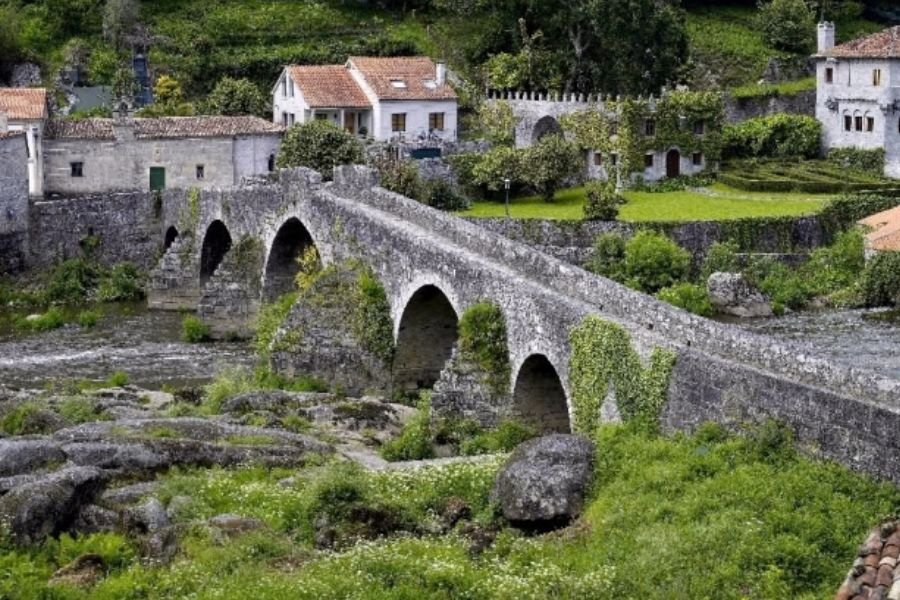
Leaving by the medieval bridge at Ponte Maceira, one of the most beautiful in Galicia.
The way out of Santiago passes through the oak grove of San Lourenzo and descends through the woods to Ponte Maceira, a stone village with a medieval bridge over the Tambre River, considered one of the most beautiful in Galicia. The day ends in Negreira, with its Pazo do Cotón and riverbanks, where the Camino Finisterre takes on its most rural feel.
3Negreira → As Maroñas · ≈25 km
The quietest inland stretch of the Camino de Santiago, between woods and villages.
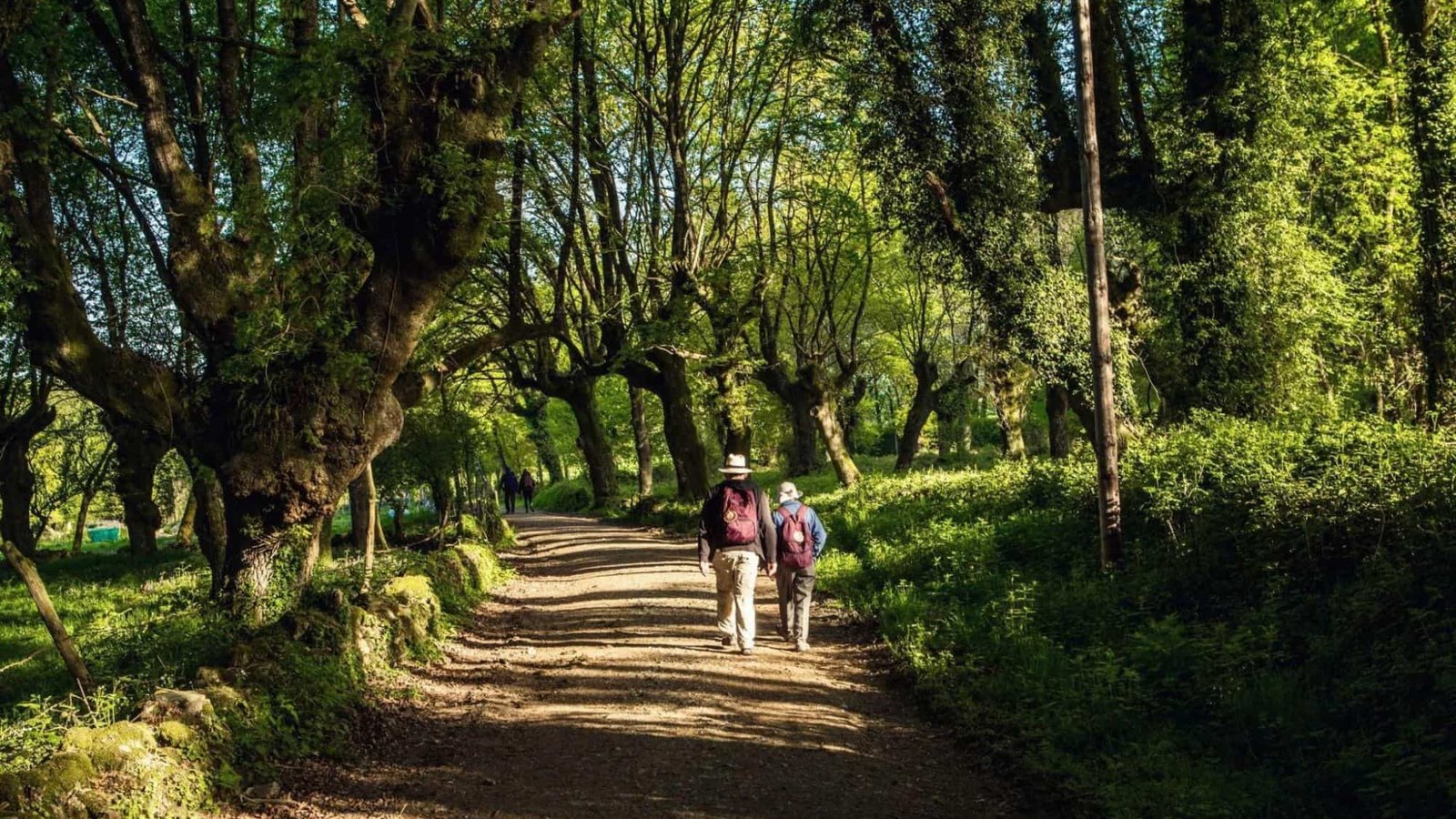
This is the quietest stage of the Camino: few villages, long stretches through eucalyptus and pine woods, fields and small chapels, such as Santa Mariña. The terrain has gentle climbs, and the landscape invites reflection. In As Maroñas, simple lodging and a good rest prepare you for tomorrow's big day.
4As Maroñas → Cee · ≈25 km
The day the Atlantic first appears on the horizon, before the descent to the coast.
After Hospital, where the Camino splits toward Fisterra and Muxía, the trail crosses an open plateau and passes the stone cross of Marco do Couto. Suddenly, the Atlantic appears on the horizon: it is one of the most moving moments of the route. The long descent leads to Cee, on the Corcubión estuary, right by the sea.
5Cee → Finisterre · ≈14 km
The last stretch by the sea and the lighthouse at Cape Finisterre, where the sunset closes the journey.
The last stretch passes through Corcubión, with its stone-built historic center, and continues past beaches and pine groves to Langosteira beach and the town of Fisterra. From there, it is about 3 km to the Cape Fisterra lighthouse, home to the kilometer 0.000 marker. Watching the sun set over the ocean, in the place the Romans called the end of the world, brings the journey to a close.
6Farewell to Finisterre
Breakfast and check-out — or one more night facing the ocean (see the extras).
Before you leave, enjoy the morning in Fisterra: walk to Mar de Fóra beach, open to the ocean, or climb Monte do Facho for a full view of the cape. If you want to keep traveling, Muxía and the Sanctuary of the Virxe da Barca, about 30 km away, are the natural complement to this route.
What you will see between Santiago de Compostela and Finisterre
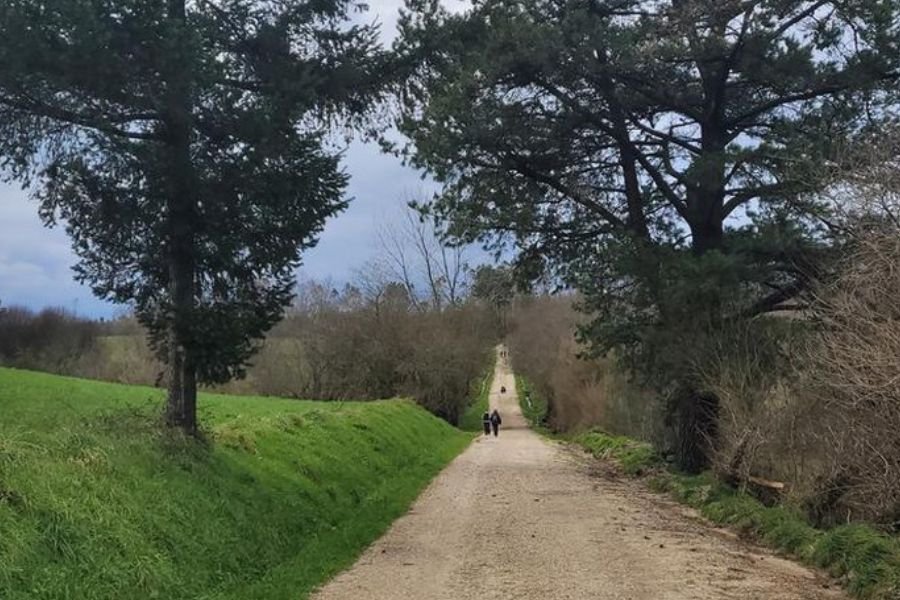
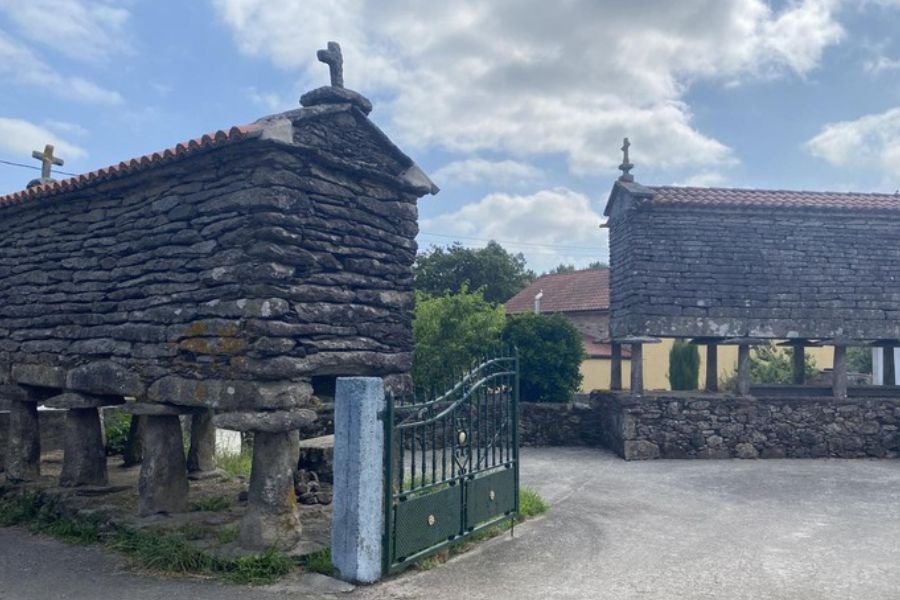
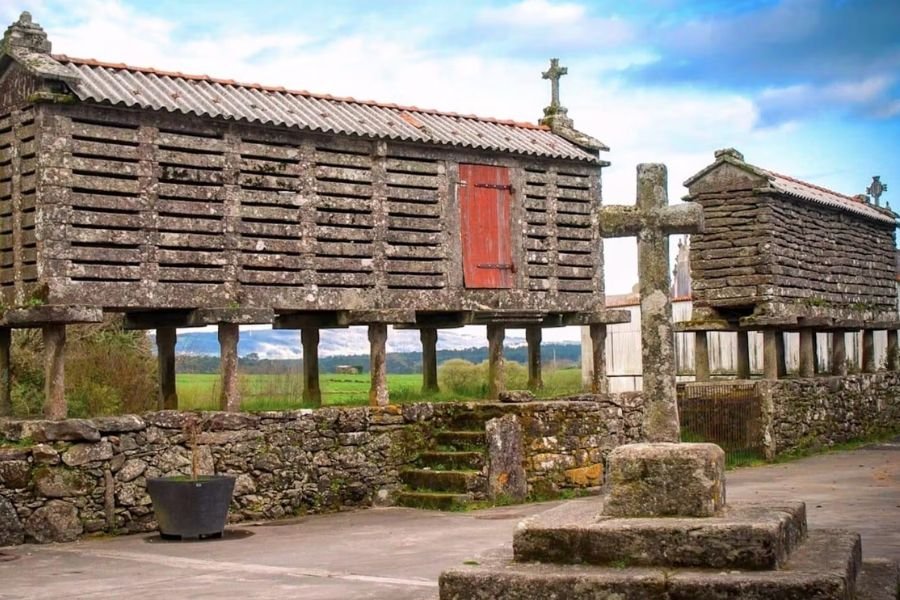
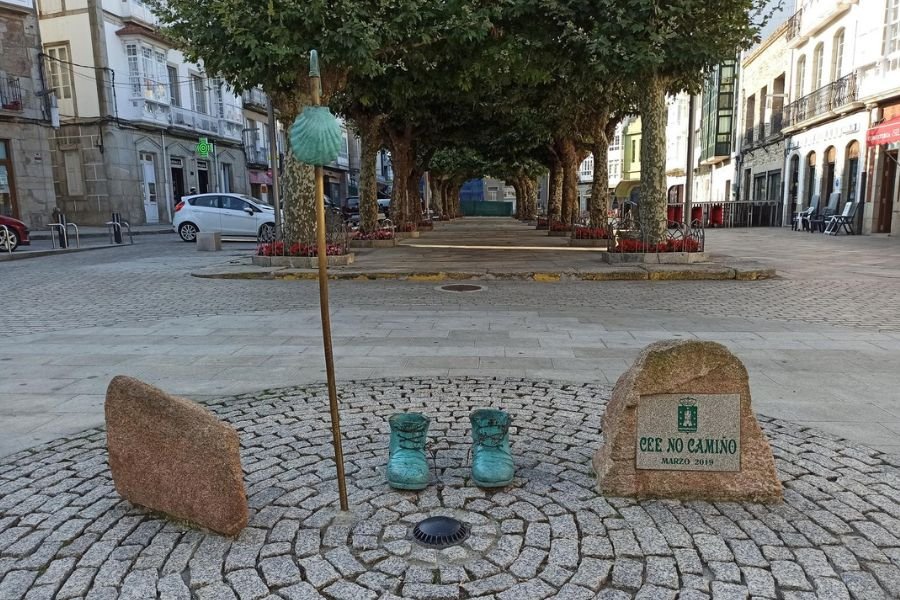
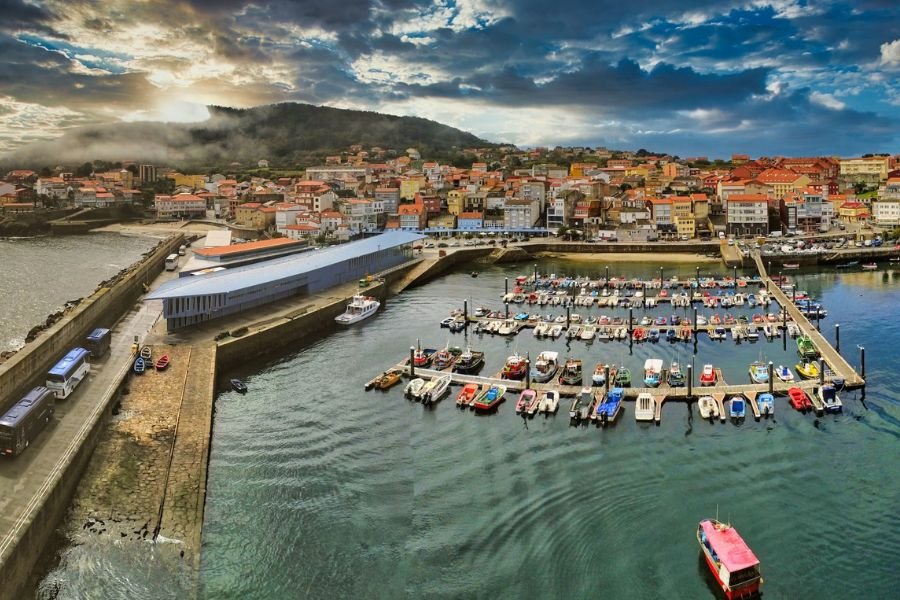
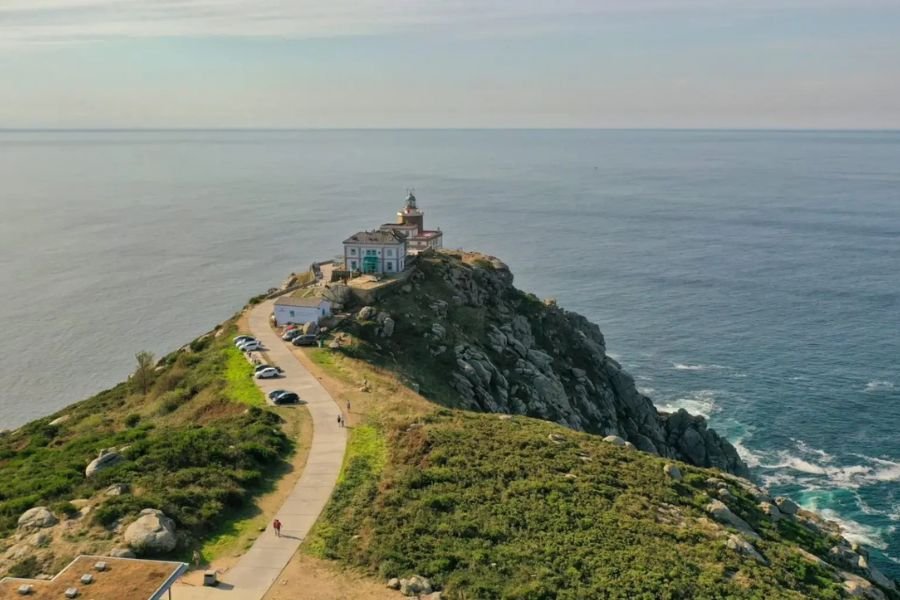
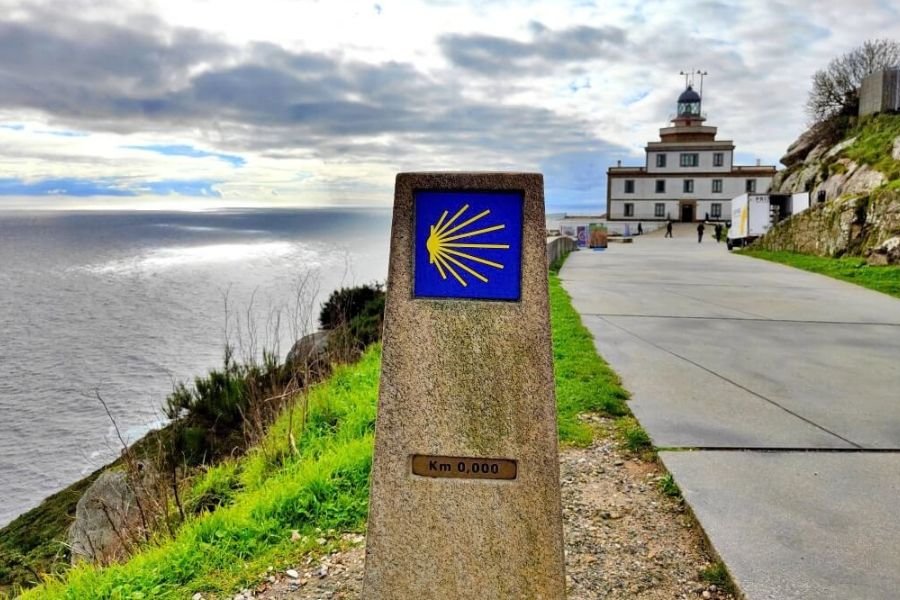
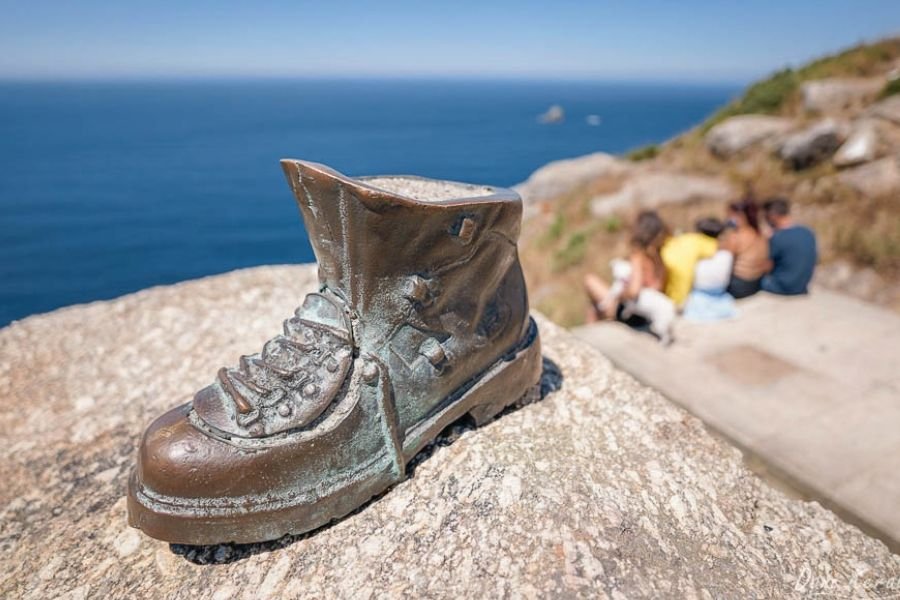
Faith and Flavor Along the Camino Finisterre (Fisterra)
Where the Camino de Santiago meets the sea
Many pilgrims feel that Santiago is the arrival, but not the end. In 2027, a Compostela Holy Year, this extension begins before the open Holy Door and ends at Cape Finisterre, where tradition invites you to watch the sunset as if closing a circle. Those who continue to Muxía also find the sanctuary of the Virxe da Barca, on the edge of the rocks.
The taste of the Costa da Morte
Fresh fish from the harbors of Cee and Finisterre, shellfish and percebes (goose barnacles) gathered from the rocks, octopus and Galician empanada — and, for those who wish, the queimada ritual at the end of the day. On the coast, every meal tastes of the sea and of arrival.
A Camino Finisterre (Fisterra) Curated by a Pilgrim Who Has Walked the Camino Twelve Times
Pablo Machado Soares walked the Camino Francés twelve times before founding Ultreya Travel, and he has lived in Spain for 17 years. He knows that, for many pilgrims, the real farewell to the Camino de Santiago happens before the Atlantic. Ultreya’s curation arranges this extension with the same care: the right accommodation, reliable luggage transfers and an itinerary that can be added to any package ending in Santiago.
Similar Experiences
One of the advantages of the Camino de Santiago is its variety of routes. Have a look at similar options to what you selected.

Camino Finisterre (Fisterra) — Self-Guided Package
Season: March 15 – October 31
"Buen Camino, pilgrim. At the end of the world, the Camino de Santiago goes on inside you."