Camino Francés (French Way) to Santiago de Compostela

The Camino Francés (French Way) is the most traditional and most-walked route of all — the same one pilgrims have followed for more than a thousand years, crossing borders, languages and landscapes to reach the Cathedral of Santiago de Compostela, in Galicia. It starts in Saint-Jean-Pied-de-Port, on the French side of the Pyrenees, and crosses northern Spain through Navarre, La Rioja and the Meseta plateau of Castile and León, before entering the green hills of Galicia: about 780 km in total, usually walked in 30 to 35 days.

All the distances for the main routes in one place: How Many Miles Is the Camino de Santiago?

If you’d rather skip the climb to O Cebreiro, you can also walk the Winter Camino from Ponferrada.

It is the route most people picture when they think of the Camino de Santiago de Compostela — yellow arrows, scallop shells hanging from backpacks, albergues full in July and August. It is also the route Ultreya Travel specializes in, with self-guided itineraries covering the final stretch to Santiago.

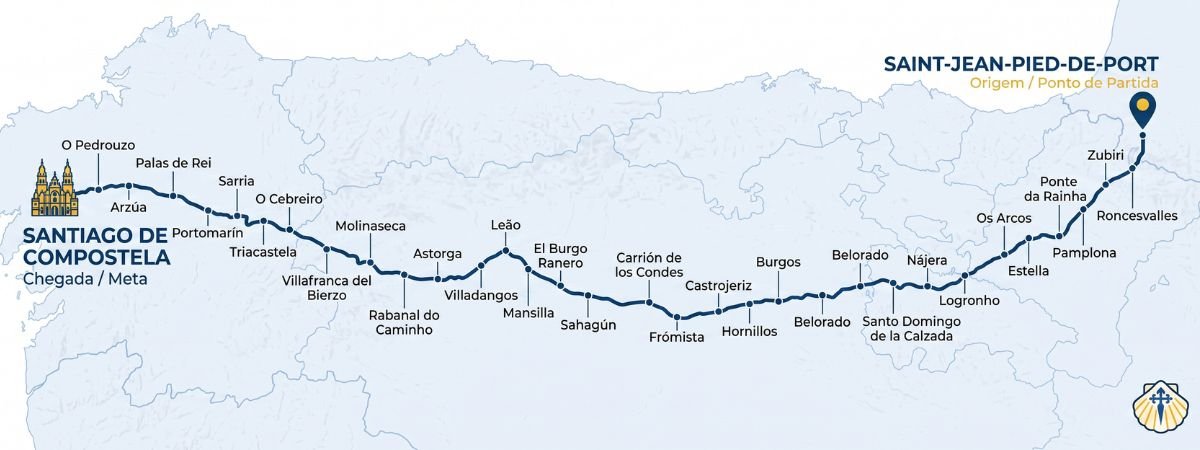
Camino Francés (French Way) map

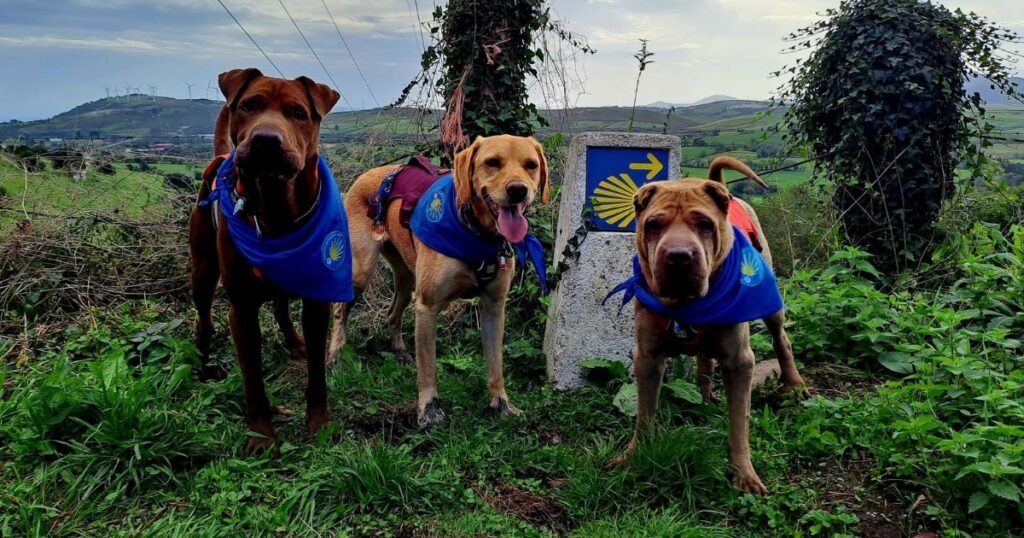
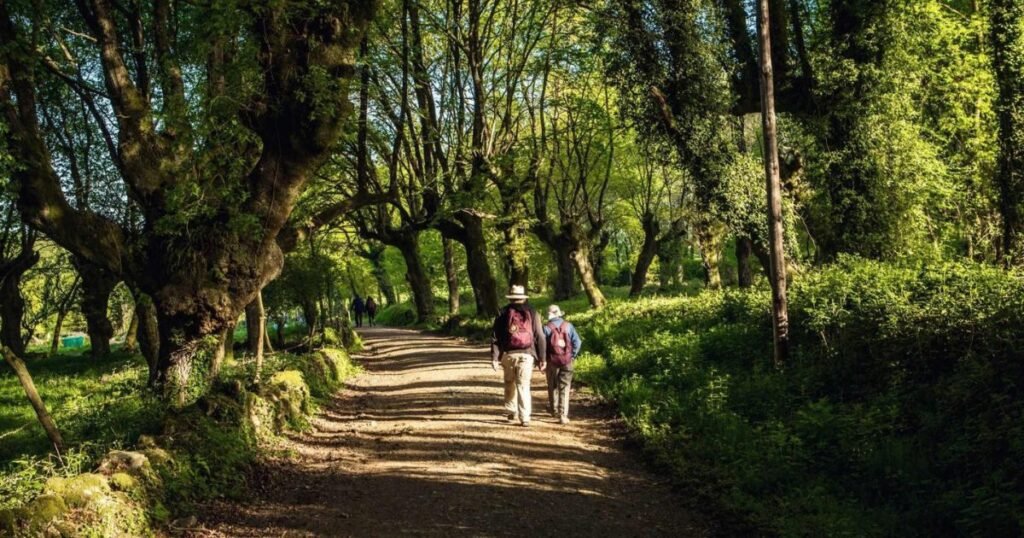
Pilgrims walking the French Way of the Camino de Santiago

Where the Camino Francés starts and ends

The traditional starting point is Saint-Jean-Pied-de-Port, a small French town at the foot of the Pyrenees — but nobody has to walk the whole route. Every town along the way is also a possible starting point: Roncesvalles, Pamplona, Logroño, Burgos, León, Astorga, Ponferrada, O Cebreiro or Sarria, each shortening the walk without taking the pilgrim off the official Camino Francés.

They all converge on the same destination: Obradoiro Square, in front of the Cathedral of Santiago de Compostela.

Main towns on the Camino Francés — distance and days to Santiago

  • Saint-Jean-Pied-de-Port (France) – 780 km to Santiago – about 33 days of walking (traditional start of the Camino Francés)
  • Roncesvalles – 765 km – about 32 days
  • Pamplona – 690 km – about 29 days
  • Logroño – 640 km – about 27 days
  • Burgos – 485 km – about 21 days
  • León – 310 km – about 13 days
  • Astorga – 260 km – about 11 days
  • Ponferrada – 205 km – about 9 days
  • O Cebreiro – 150 km – about 7 days
  • Sarria – 115 km – about 5 to 7 days (minimum distance for the Compostela)
  • Portomarín – 92 km – about 4 days
  • Arzúa – 39 km – about 2 days
  • Santiago de Compostela – arrival

From Saint-Jean-Pied-de-Port to the Meseta: the first great landmarks

The traditional journey begins at the foot of the Pyrenees. On the very first day, pilgrims face the toughest climb of the whole route, crossing the border on foot to Roncesvalles, in Spain — a medieval monastery that has welcomed walkers for more than 900 years.

“Whoever crosses the Pyrenees on foot learns, on the very first day, the lesson the whole Camino will repeat: every weight taken out of the backpack is a weight lifted somewhere else.”

From Roncesvalles, the Camino continues to Pamplona, capital of Navarre, with its old town full of cafés and Romanesque churches. Then comes Logroño, heart of La Rioja — one of Spain’s most important wine regions, where it is not unusual to see pilgrims stopping at a local bodega.

The next great landmark is Burgos, with its Gothic cathedral, a UNESCO World Heritage Site, which closes the so-called “first half” of the route before the long, flat Castilian Meseta.

From the Meseta to Galicia: the final stretches

León, with its Gothic cathedral of luminous stained glass and the ancient Royal Pantheon, is one of the most traditional meeting points on the Camino. Next comes Astorga, home to one of the route’s lesser-known treasures: the Episcopal Palace designed by Antoni Gaudí, and the artisan chocolate that has been a local tradition for centuries.

Soon after Astorga, pilgrims climb to the Cruz de Ferro, the highest point of the whole route at about 1,500 meters — where it is tradition to leave a stone brought from home, a symbol of leaving a burden behind before continuing the journey.

“At the Cruz de Ferro, the highest point of the whole route, pilgrims lay down a stone brought from home every year — a simple gesture that carries a very different weight for each of them.”

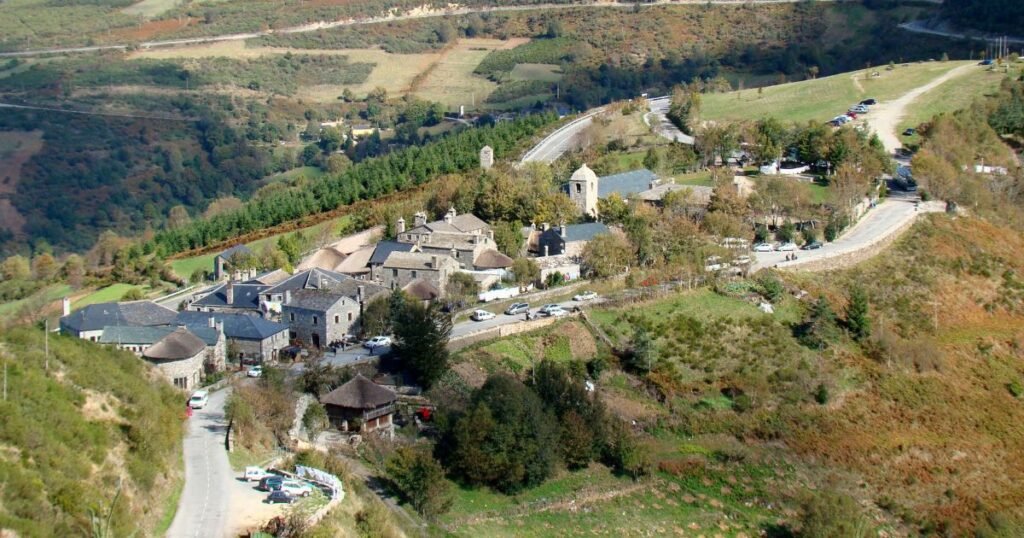
From there, the path descends to Ponferrada, home of the Templar Castle, built in the 12th century to protect pilgrims passing through the region. Then comes the climb to O Cebreiro, the symbolic gateway into Galicia, with its stone-and-thatch pallozas (see how to get to O Cebreiro). Next is Sarria — 115 km from Santiago and therefore the most popular starting point for those who want to walk the minimum required for the Compostela, the official pilgrim certificate. If you are starting there, see our guide on how to get to Sarria.

From Sarria, the Camino passes through Portomarín, rebuilt on a hilltop after the original town was flooded in the 1960s, and on to Arzúa, home of Arzúa-Ulloa cheese — and, finally, to Santiago de Compostela.

How long does the Camino Francés take?

The full Camino Francés, from Saint-Jean-Pied-de-Port, takes 30 to 35 days of walking. But the time needed changes with the starting point: from Sarria — the minimum distance for the Compostela — it is about 115 km, walked in 5 to 7 days. From León there are still about 310 km to go; from Astorga, 260 km.

Want to know how many days each route takes? See: How Long Does the Camino de Santiago Take?

The Camino Francés with Ultreya Travel
You have just discovered the whole Camino Francés, from the Pyrenees to Obradoiro Square. Ultreya Travel’s self-guided itineraries take you along the final chapter of that story — from Sarria or O Cebreiro to Santiago, through Portomarín, Palas de Rei and Arzúa to the Cathedral — with every stage designed by someone who has walked the Camino Francés 12 times.

You walk at your own pace, with accommodation booked on every stage, daily luggage transfers and 24/7 assistance throughout your journey.

Want to compare it with other routes? See all our Camino de Santiago tour packages on one page.

Frequently asked questions about the Camino Francés

The traditional starting point is Saint-Jean-Pied-de-Port, a small French town at the foot of the Pyrenees. But many pilgrims start in other towns along the way, such as Roncesvalles, Pamplona, Logroño, Burgos, León, Astorga, Ponferrada, O Cebreiro or Sarria — each shortens the walk but is still part of the official Camino Francés.

The full Camino Francés, from Saint-Jean-Pied-de-Port, is about 780 km. From León it is about 310 km; from Astorga, 260 km; and from Sarria — the minimum required for the Compostela — around 115 km.

To receive the Compostela, the official pilgrim certificate, you must walk at least 100 km. The most popular starting point for this is Sarria, in Galicia, about 115 km from Santiago — which is why it is one of the busiest towns on the whole route.

The full route takes 30 to 35 days. Shorter sections, such as the one from Sarria, can be walked in 5 to 7 days — what matters is choosing the section that fits the time you have, not the other way round.

Ultreya Travel
Privacy Overview

This website uses cookies to give you the best possible experience. Strictly necessary cookies are always active; all other cookies are only used if you consent. You can change your choice at any time.