
How to Get to Sarria, Spain: A Guide to Starting the Camino de Santiago
Why so many pilgrims start the Camino de Santiago in Sarria
Sarria is by far the most popular place to start the Camino de Santiago. The town sits in the province of Lugo, in Galicia, about 116 km (72 miles) from the Cathedral of Santiago — just over the 100 km minimum you need to walk to earn the Compostela, the official pilgrim certificate.
It is the perfect starting point if you have a week of vacation and want the full experience of arriving in the Plaza del Obradoiro. But before the first step comes a practical question: how do you get to Sarria? Here is how to get to Sarria, with every option and approximate travel times.
Our Self-Guided Packages from Sarria
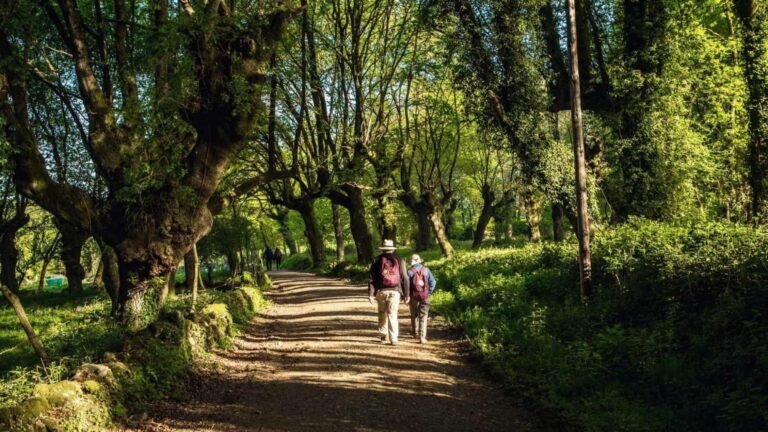
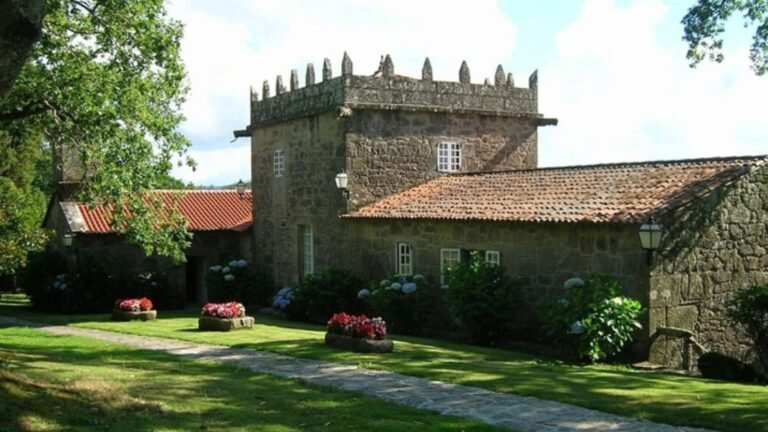
116 km · 5 stages · 6 nights
From the US to Spain: which airport to choose
Sarria has no airport, so the trip always combines a flight to Spain (or Portugal) with an overland leg. These are the most practical gateways for travelers coming from the United States:
- Madrid (Adolfo Suárez Madrid-Barajas Airport): the most common choice, with nonstop flights from several US cities. From Madrid, a direct train takes you all the way to Sarria.
- Santiago de Compostela (Rosalía de Castro Airport): the closest airport to Sarria, a little over 100 km away. There are no nonstop flights from the US, but it is easy to connect through Madrid, Barcelona, Lisbon, or another European hub.
- A Coruña and Vigo: two other Galician airports with domestic flights and some European connections — worth checking when fares to Santiago are high.
- Lisbon or Porto: some US cities have nonstop flights to Portugal. From Porto, buses to Santiago de Compostela take about 4 hours; from there, you continue to Sarria.
A tip: most flights from the US are overnight and land in the morning. If you are tired, spend a night in Madrid and travel to Sarria rested the next day.
How to get to Sarria from Madrid
Madrid is the most common gateway, and the good news is that there is a direct train to Sarria.
- Train (Renfe): trains leave from Madrid-Chamartín station and reach Sarria in about 4 hours (the fastest take a little less). There are only a few departures a day, so book early on the Renfe website or app — the earlier you book, the cheaper the fare. Sarria station is right in town.
- Bus: there is no direct bus from Madrid to Sarria. ALSA runs Madrid–Lugo (about 7 to 8 hours, including overnight departures), and from Lugo you continue to Sarria by bus or train.
- Fly + ground: you can also fly from Madrid to Santiago de Compostela (just over an hour) and continue overland, as explained below.
- Car: it is about 500 km (310 miles) on the A-6 highway toward Galicia — roughly 5 hours. Keep in mind that the car will sit parked for the whole week while you walk.
“The Camino does not start in Sarria — it starts the day you decide to go.”
How to get to Sarria from Santiago de Compostela
Many pilgrims prefer to fly straight into Santiago de Compostela, where the journey will end. From there to Sarria it is about 115 km (70 miles).
- Bus: buses connect Santiago (and, at some times of day, the airport itself) with Sarria, either direct or with a change in Lugo. The trip takes 2 to 4 hours, depending on the route and the number of stops.
- Train: possible, but with a transfer and few departures, which makes it a long trip. In most cases the bus is more practical.
- Taxi or private transfer: the fastest option — about 1.5 hours by car from the airport or the city, with no schedules to follow and no bags to haul between stations.
How to get to Sarria from Lugo
Lugo, the provincial capital, is just 30 km (19 miles) from Sarria and works as a connection point if you arrive by bus from other Spanish cities.
- Train: several trains a day, with rides of 20 to 35 minutes.
- Bus: frequent departures throughout the day, about 40 minutes.
- Taxi: a short ride of around 30 minutes.
If you have time, walk along the Roman Walls of Lugo, a UNESCO World Heritage Site, before heading to Sarria.
Private transfer: the easiest way to get to Sarria
If you would rather not worry about train and bus schedules, a private transfer is the most relaxed option: someone meets you at the airport and drops you off at the door of your hotel in Sarria.
With our Camino Sarria to Santiago self-guided package, the transfer from Santiago airport to Sarria can be added as an option (€ 185 per person). The package already includes your first night in Sarria, so you can arrive calmly, rest from the trip, and start walking the next day.
Want to start in Sarria? Explore our package
The Camino Sarria to Santiago de Compostela — Self-Guided package from Ultreya Travel is available year-round, from € 670:
🛏️ 6 nights with breakfast, 🎒 luggage transfer between stages, 🧭 stage-by-stage digital guide, 🚐 Santiago airport transfer (optional), 📞 24/7 support
Tips for your arrival in Sarria
- Arrive a day before you start walking. After a transatlantic flight and hours on a train or bus, your body will thank you for a night of rest in Sarria before the first stage to Portomarín.
- Get your pilgrim passport and your first stamp. The credencial, or pilgrim passport, is where you collect a stamp at each stop. On the last 100 km you need at least two stamps a day to earn the Compostela — and the first one can be in Sarria itself.
- Check schedules on the official websites. Train and bus times and fares change with the season and drop on Sundays and holidays. Always check Renfe, ALSA, and the Galician bus companies before you buy.
- Pack light. If your package includes luggage transfer between stages, your main bag travels from hotel to hotel and you walk with just a small daypack.
- Plan for the time difference. Spain is 6 hours ahead of New York and 9 hours ahead of the West Coast. Arriving a day early helps you get over jet lag.
Getting to Sarria is simpler than it looks: a flight to Madrid or Santiago de Compostela, a few hours by train, bus, or transfer, and you are ready to walk the last 100 km of the Camino Francés. To compare the distance of every route, read how many miles the Camino de Santiago is. Buen Camino!