
O Cebreiro Camino de Santiago — Self-Guided The Last 160 km to Santiago de Compostela
It all begins up high: the stone pallozas of O Cebreiro, the mist over the valleys and the gateway of the Camino Francés (French Way) into Galicia. From there, seven stages heading down toward Santiago — more days, more calm and more time to feel every final kilometer of the Camino de Santiago.
What’s Included in Your O Cebreiro Camino de Santiago
Every detail is already taken care of — so you reach each stage thinking only about the next one, never about logistics.
Customize Your O Cebreiro Camino de Santiago
The base price of € 840 already includes 8 nights in a double room with breakfast. Check anything you would like to add — the total is recalculated automatically. If it’s for a single pilgrim, the room is for individual use.
Camino Calculator — O Cebreiro to Santiago
Choose your start date
Day you arrive in O Cebreiro. Click a day and we will highlight every day of your Camino de Santiago.
Season: March 15 to October 31 — pick your start date within these dates and start packing your backpack.
Send your booking request
Loading the form…
Prices are subject to availability on your chosen date. Extra nights are quoted as “from” prices — we will confirm the final amount with you.
There may be small changes depending on accommodation availability on your chosen date.
By sending this request, you agree to our Privacy Policy.
The O Cebreiro Camino de Santiago, Stage by Stage

1Arrival in O Cebreiro
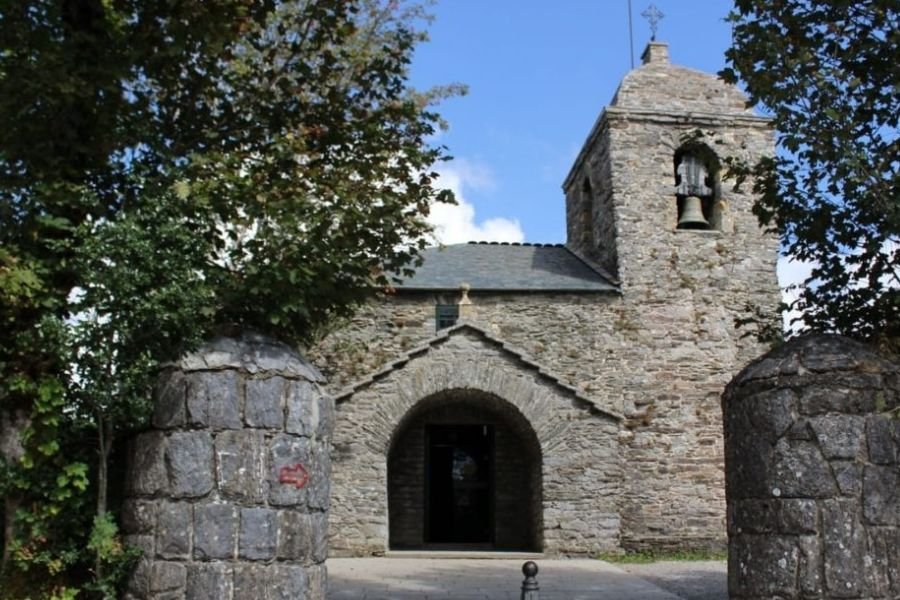
Check-in at the mountain village and the first stamp in your pilgrim passport, beside the pre-Romanesque church of Santa María. See how to get to O Cebreiro.
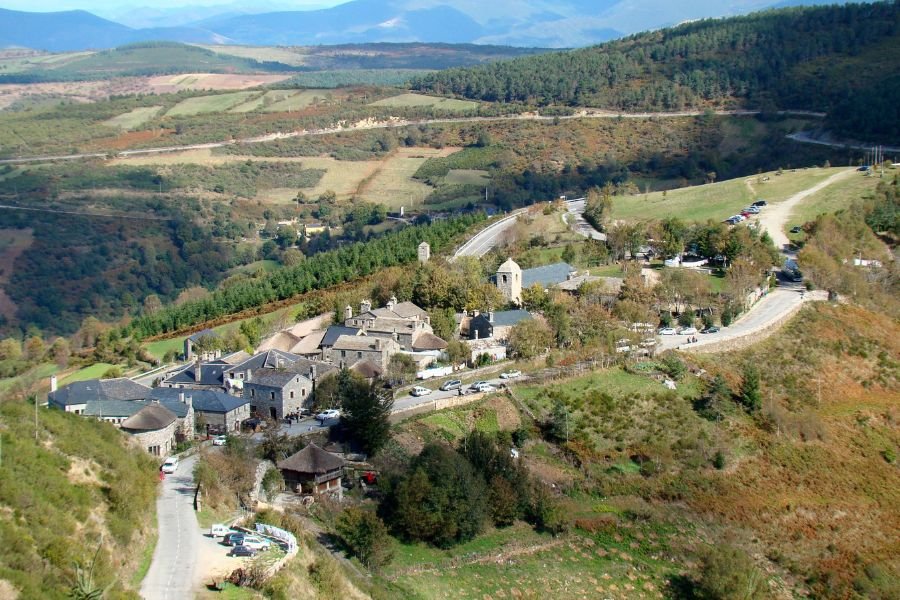
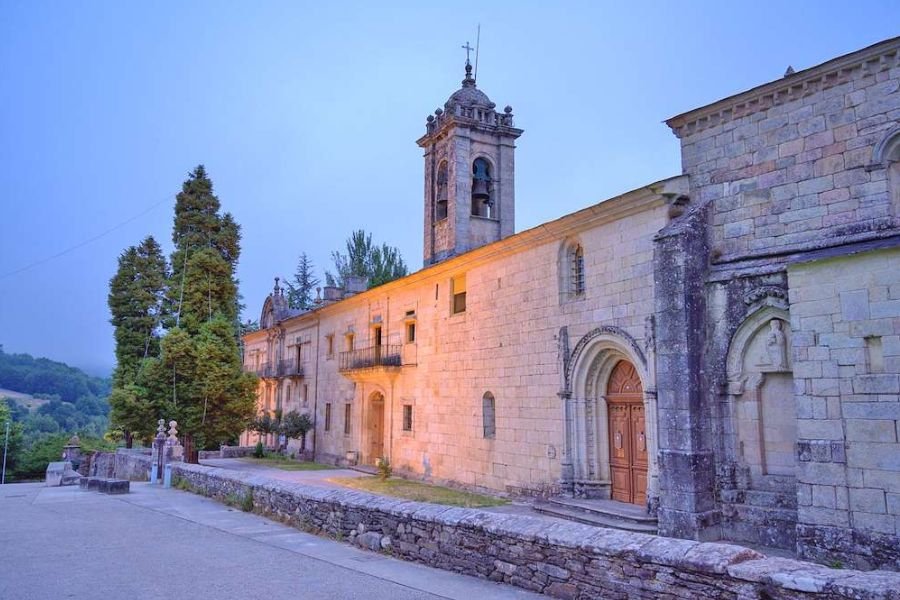
O Cebreiro packs centuries of history into a few stone lanes. Visit the pre-Romanesque church of Santa María a Real, tied to the legend of the Eucharistic miracle that put the chalice on Galicia’s coat of arms and resting place of Father Elías Valiña, the parish priest who painted the first yellow arrows in the 20th century. Among the thatched-roof pallozas, watch the sun set over the mountains — then rest: tomorrow’s descent is a long one.
2O Cebreiro → Triacastela · ≈21 km
The great descent through the mountains, with views opening over the valleys of Lugo.
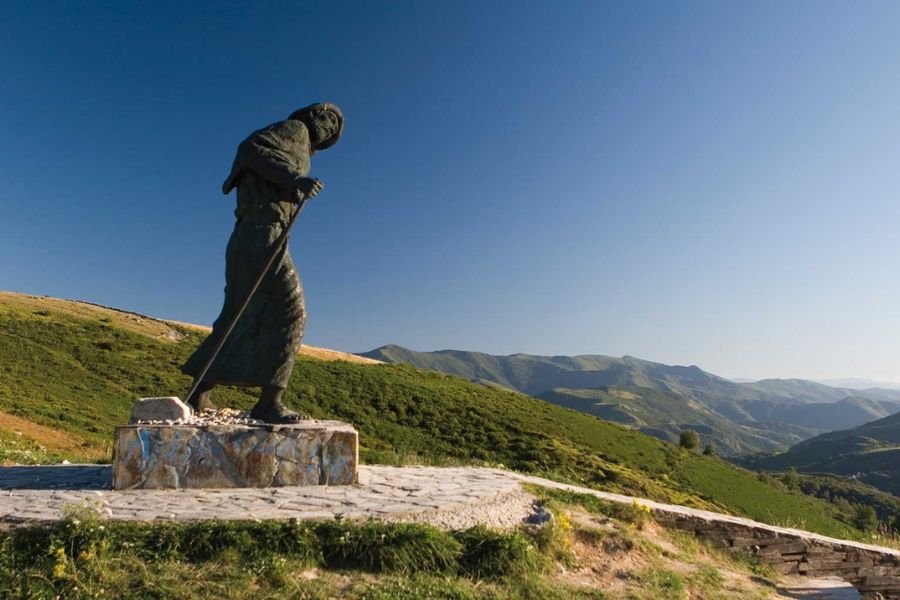
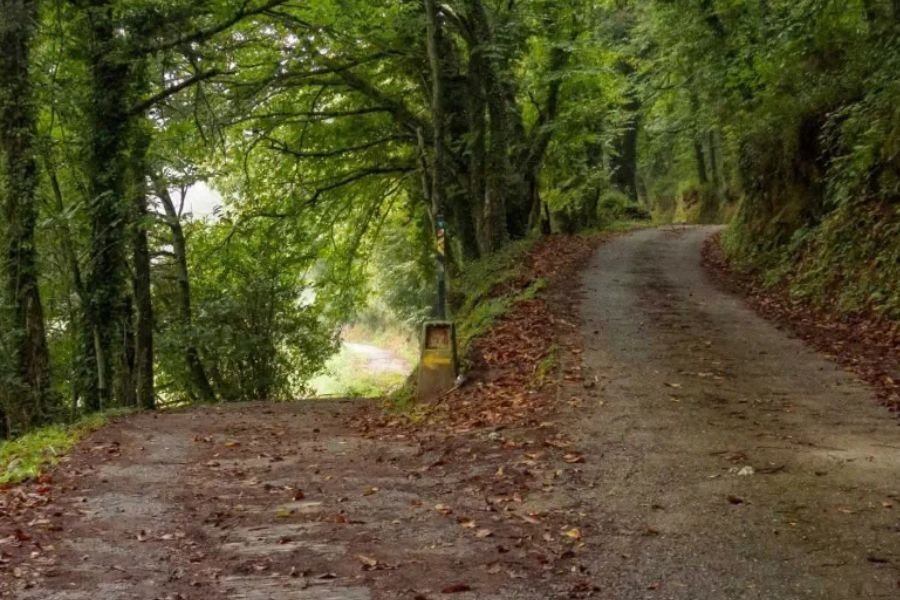
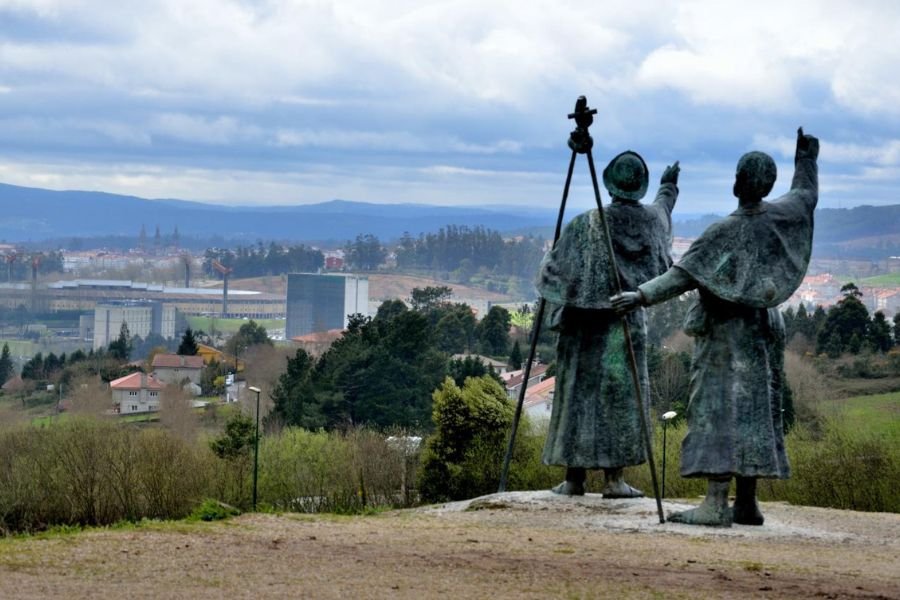
The stage starts along the mountain ridge, through Liñares and over the Alto de San Roque, where a bronze pilgrim leans into the wind. After Hospital da Condesa comes the last climb, to the Alto do Poio, and the Camino continues through Fonfría and Biduedo before the long descent among centuries-old chestnut trees to Triacastela, a town named for three castles that no longer stand.
3Triacastela → Sarria · ≈21 km
Chestnut woods and villages where time seems to move more slowly.
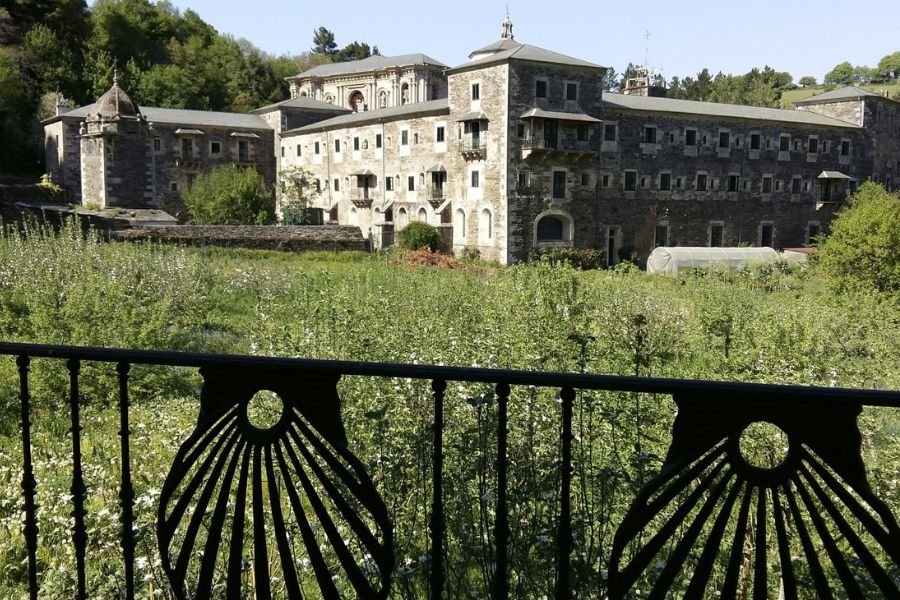
In Triacastela the Camino splits into two routes that meet again before Sarria. The San Xil route is shorter and rural, through woods and tiny hamlets. The Samos route takes a detour of a few kilometers along the Oribio valley to the Monastery of Samos, one of the oldest in Spain and still home to Benedictine monks. Both end in Sarria, the starting point of the last 100 km.
4Sarria → Portomarín · ≈25 km
The 100 km marker and your arrival at the village rebuilt above the Miño River.
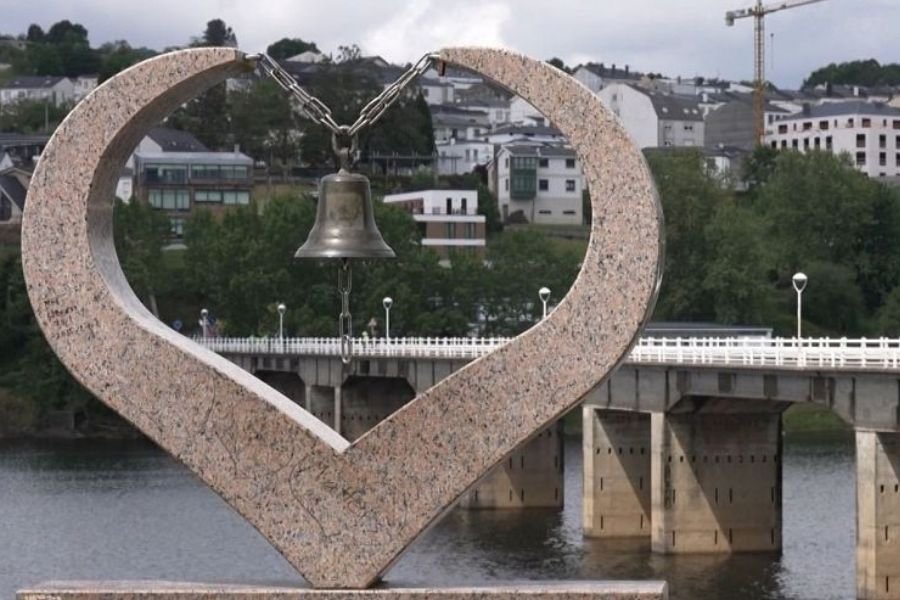
Today the Camino enters its last 100 km. Leaving Sarria, the trail climbs through oak woods to Barbadelo and continues between stone walls, small farms, and streams. The marker showing 100 km to Santiago is usually the photo of the day. In the afternoon, the long descent ends at the Miño River and the bridge into Portomarín, where the church of San Nicolás was rebuilt stone by stone at the top of the new town.
5Portomarín → Palas de Rei · ≈25 km
A gentle climb through inland Galicia, among stone wayside crosses.
After crossing the Miño again, the day begins with a climb up the hillside through pine forest. The trail passes Gonzar, the ancient castro of Castromaior, and hamlets such as Ventas de Narón and Ligonde, home to one of the most admired stone crosses on the route. A short detour leads to the church of Vilar de Donas, with its medieval wall paintings; at the end, Palas de Rei welcomes you with a quiet evening.
6Palas de Rei → Arzúa · ≈28 km
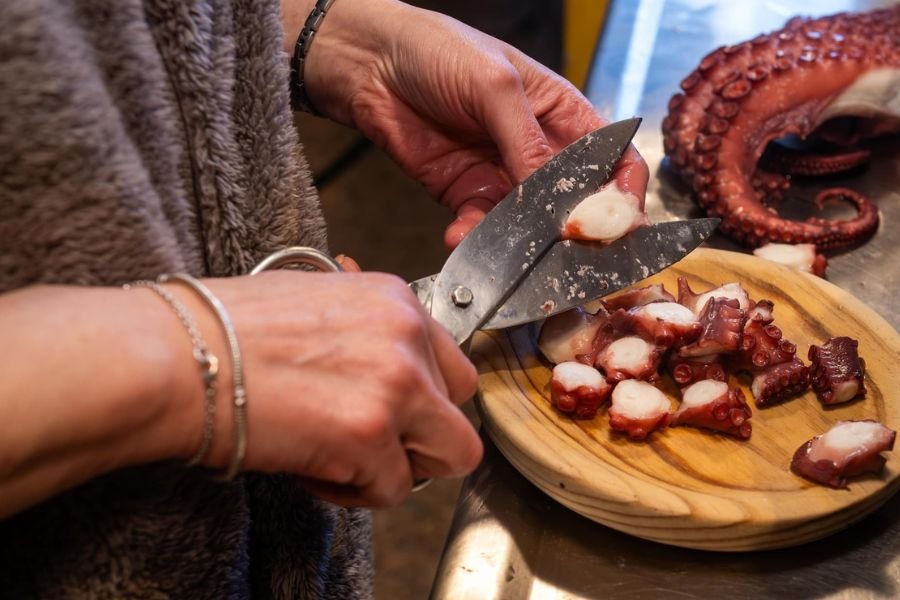
The longest stage, through Melide — home of pulpo a la gallega.
A long day, but full of rewards. The Camino crosses the hamlet of Leboreiro, with its medieval cobbled lane, and the bridge at Furelos before entering Melide, where a stop for Galician-style octopus is practically a must. The second half alternates woods, short climbs, and streams to the bridge at Ribadiso and the arrival in Arzúa, famous for its creamy cheese.
7Arzúa → O Pedrouzo · ≈21 km
Eucalyptus trees, streams and Santiago drawing ever closer.
With the finish in sight, this stage has an easy rhythm. The trail runs through small villages and long tunnels of eucalyptus with few climbs, past the chapel and fountain of Santa Irene. O Pedrouzo, seat of the municipality of O Pino, is your last overnight before Santiago — a good moment to look back on everything you have walked since the mountains.
8O Pedrouzo → Santiago de Compostela · ≈19 km
Monte do Gozo, the first Cathedral towers and Obradoiro Square.
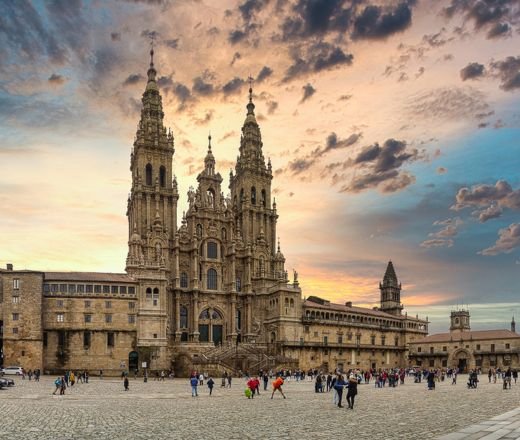
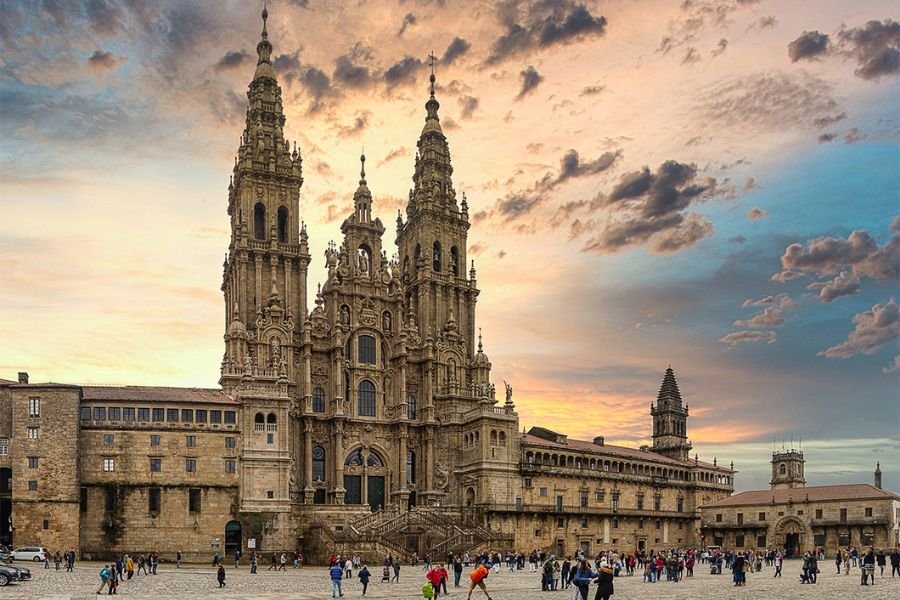
The last morning passes San Paio and Lavacolla, where medieval pilgrims washed before reaching the holy city, and climbs to Monte do Gozo, where you first glimpse the Cathedral towers. The walk into Santiago follows Rúa de San Pedro and the Porta do Camiño into the old town and, at last, Obradoiro Square. Your Compostela is issued at the Pilgrim’s Office.
9Farewell to Santiago
Breakfast and check-out. There is still time for the noon Pilgrim’s Mass — or you can stay one more night (see the extras).
Your last day is for enjoying Santiago without a backpack. Visit the Cathedral, tour its rooftops or go down to the Apostle’s crypt, and attend the Pilgrim’s Mass at noon. Then wander the stone streets of the old town, try a slice of tarta de Santiago, and say goodbye to the city at an easy pace before you travel on.
What you will see between O Cebreiro and Santiago de Compostela
Faith and Flavor Along the O Cebreiro Camino de Santiago
From the mountain to the Holy Door
In O Cebreiro, tradition keeps the memory of a Eucharistic miracle and of centuries of pilgrims who gave thanks there for the end of the climb. In 2027, a Compostela Holy Year, the same path ends before the open Holy Door, with the possibility of the plenary indulgence, the Pilgrim’s Mass and, if the day allows, the flight of the Botafumeiro.
From the mountains to the table
Cebreiro cheese, shaped like a chef’s hat, the caldo gallego that warms you after the descent, the pulpo a la gallega of Melide and Arzúa-Ulloa cheese near the end. Every stage has its own flavor — and the half-board option means dinner is taken care of almost every night.
An O Cebreiro Camino de Santiago Curated by Someone Who Has Walked It Twelve Times
Pablo Machado Soares walked the Camino Francés twelve times before founding Ultreya Travel, and he has lived in Spain for 17 years. Walking the Camino Francés so many times taught him the value of these two extra stages: the descent from the mountains changes a pilgrim’s rhythm before Sarria. Ultreya’s curation takes care of the right accommodation, reliable luggage transfers and the details that make the difference between walking the Camino de Santiago and truly living it.
Similar Experiences
One of the advantages of the Camino de Santiago is its variety of routes. Have a look at similar options to what you selected.
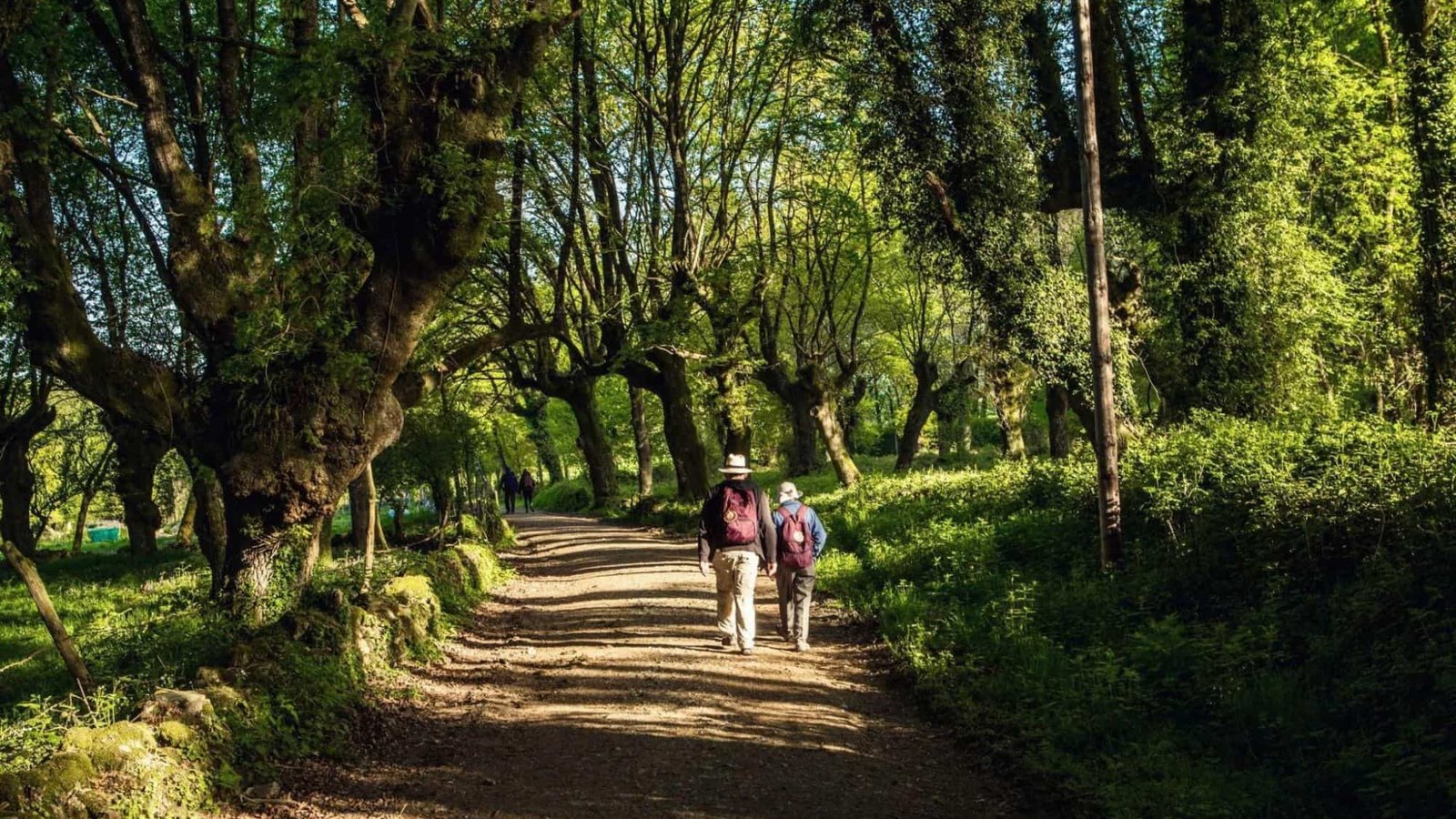

O Cebreiro Camino de Santiago — Self-Guided Package
Season: March 15 – October 31
"Buen Camino, pilgrim. When you reach Santiago, the Camino de Santiago is only beginning."